
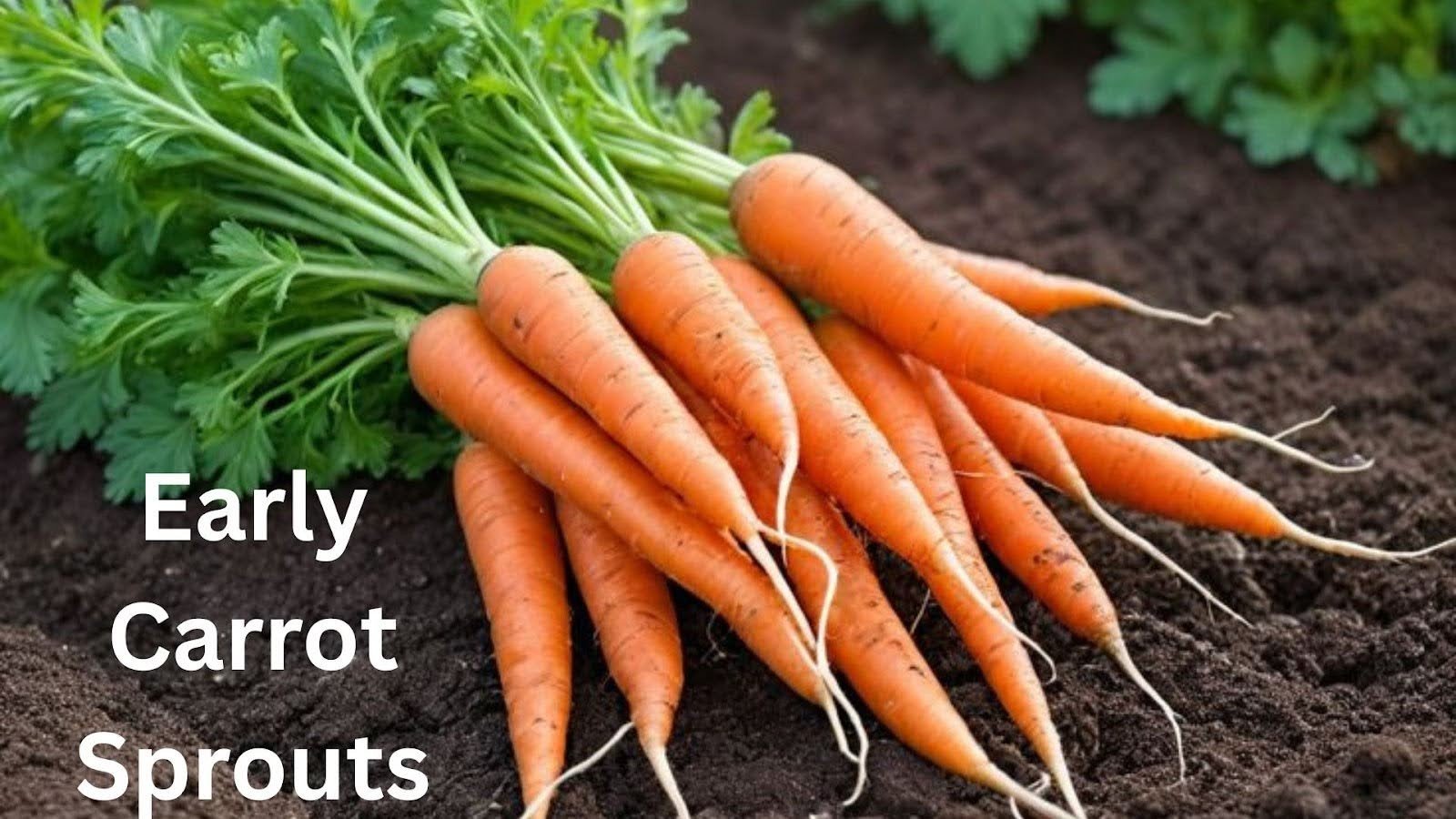
There is something about looking over your garden bed every morning, eagerly waiting to see those first tiny carrot sprouts that make the whole experience so special. I can recall my very first time trying to grow carrots.
Carrots grown from seeds can really test your patience, but the result is totally worth it and good to use. Here, I will guide you through the growth of identifying the growth stage, from the very first tiny thread-like seedlings to the growth of the feathery leaves.
The article will help you. Just know that carrot seeds generally take from 14 to 21 days to germinate. That is superior normal. Some methods might be able to show their first sprouts in 10 days if the conditions are perfect, while others will take longer.
What Are Early Carrot Sprouts and What Do They Look Like?
Knowing what you’re looking for makes all the difference when growing carrots from seed.
Understanding Carrot Germination Stages
The germination process takes 14-21 days on average, and most of the action happens where you can’t see it. During this time, the seed absorbs water from the soil and begins to swell. Inside that tiny seed
Before you see any early carrot sprouts above ground, that little root is already working its way into the soil. The seed coat splits open, and the sprout uses all its stored energy to break through the soil surface.
The first visible sign is usually a thin, pale green stem that looks almost like a tiny grass blade. It’s easy to miss if you’re not looking carefully. These first sprouts are delicate and need your attention to survive their first days above ground.
Identifying Cotyledons: Your First Carrot Leaves
When your carrot seeds finally sprout, the first leaves you’ll see are cotyledonsand they look nothing like the feathery carrot leaves you might expect. These cotyledons appear as long, thin, grass-like leaves that stick straight up from the soil.
The cotyledons typically appear 14-21 days after you plant your seeds, though this varies with temperature and moisture. These first leaves are actually part of the seed itself, designed to give the baby plant energy until it can make its own food.
Don’t worry when these cotyledons start to yellow and drop off after about two weeks. This is completely normal. By that time, the plant has grown its true leaves and doesn’t need the cotyledons anymore.
Recognizing True Carrot Leaves
True carrot leaves start appearing 1.5-3 weeks after you plant your seeds, depending on growing conditions. These leaves look completely different from the cotyledons. They’re small, frilly, and finely divided, exactly what you’d expect carrot foliage to look like, just in miniature.
Watch for these true leaves to emerge from the center, between the two cotyledons. At first, they’re tiny and might only have a few segments, but they quickly develop that classic feathery, lacy pattern.
Once you see these true leaves, your early carrot sprouts are established and growing well. From this point forward, the plant will keep producing more and more of these frilly leaves while the root grows underground.
How to Successfully Sprout Carrot Seeds (Step-by-Step)?
Getting your carrot seeds to sprout requires attention to several important details throughout the growing process.
Choosing the Right Planting Time and Location

Soil temperature makes a huge difference in whether your carrot seeds will sprout. The ideal range is 55-65°F, though seeds can still germinate in temperatures between 40-85°F. I use a soil thermometer to check before planting.
For spring planting, sow your seeds 2-3 weeks before your last expected frost date. The soil should be workable and not too wet. For a fall crop, plant about 10 weeks before your first expected frost.
Carrots need full sun to grow well. Aim for 6-10 hours of direct sunlight each day. Less sun means smaller carrots and slower growth. Pick a spot in your garden that gets sun most of the day, away from tall plants or structures that create shade.
Preparing Soil for Carrot Seed Germination
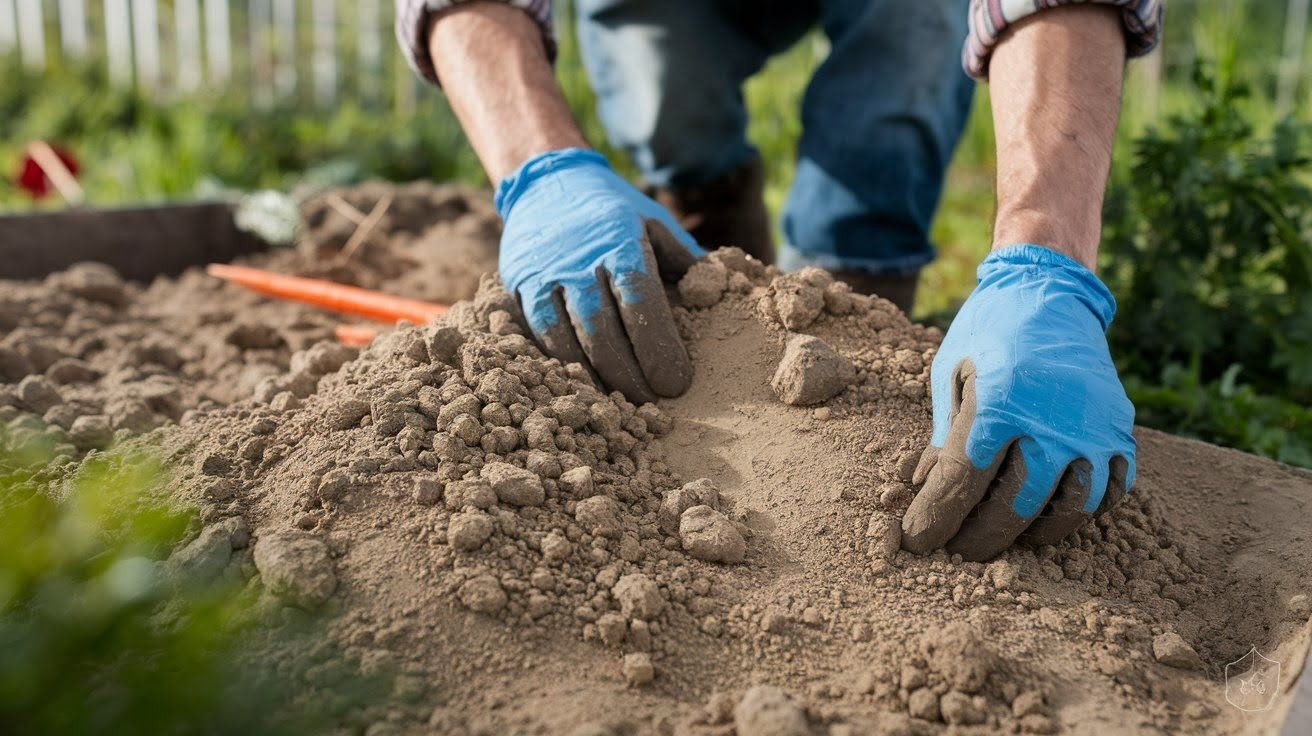
Your soil preparation directly affects whether you’ll get straight, healthy carrots or twisted, forked roots. Carrots need loose, well-draining soil with a sandy texture. Heavy clay soil causes all sorts of problems, from poor germination to deformed roots.
Work your soil to a depth of 8-12 inches, breaking up all the clumps. This might seem like a lot of work, but carrots need this depth to grow straight down. Remove every rock, stick, and hard chunk you find.
The ideal pH level for carrots is 6.0-6.8, which is slightly acidic to neutral. If your soil is heavy clay, mix in sand and compost to improve drainage and texture. I’ve found that adding compost also helps the soil hold moisture without becoming waterlogged.
Proper Seed Sowing Technique (Critical for Success)
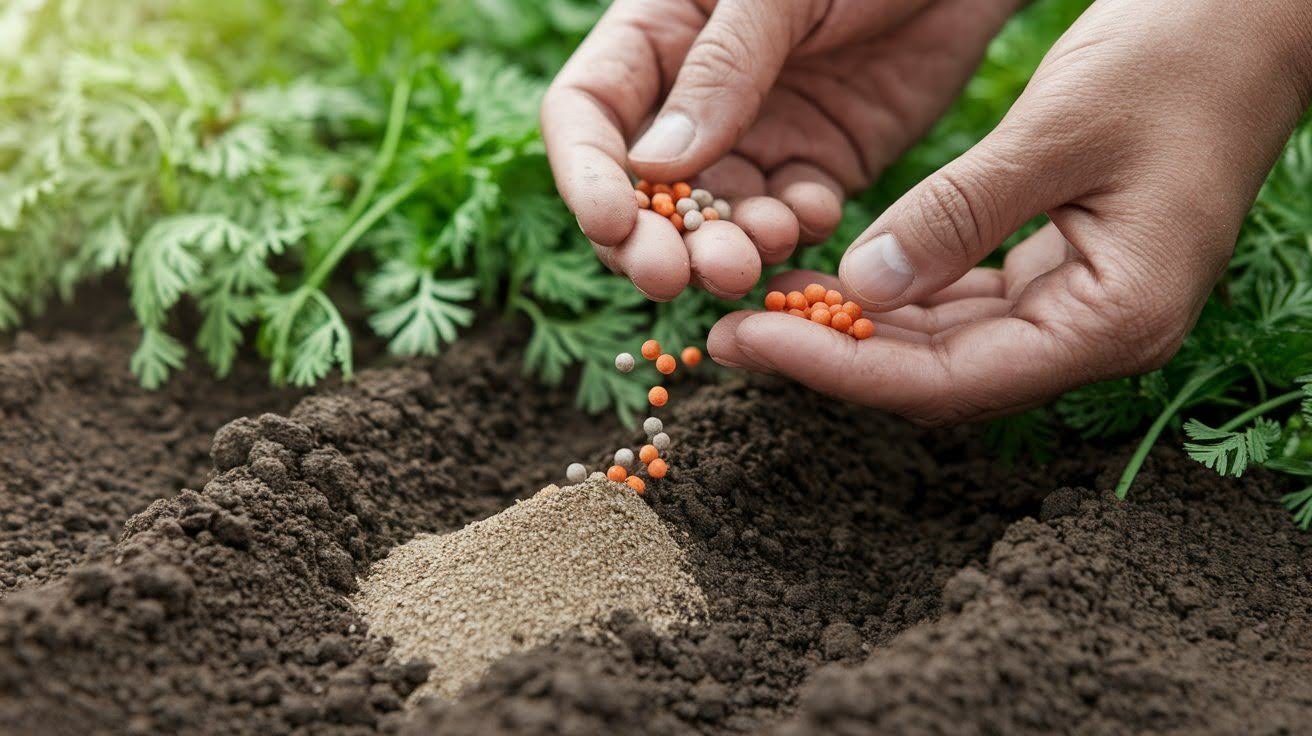
Here’s where many gardeners make a critical mistake: planting carrot seeds too deep. These seeds are tiny and need light to germinate. Plant them barely under the surface, no more than ¼ inch deep.
The technique I use works really well. I sprinkle the seeds across the prepared soil, then lightly scratch the surface with my fingers to barely cover them. Some people mix the seeds with sand to help spread them more evenly.
Don’t worry about spacing perfectly right now. It’s actually better to overseed slightly because not every seed will sprout. You can thin the seedlings later once they’re established. The most important thing is keeping them shallow and in good contact with moist soil.
The Secret to Carrot Seed Germination: Consistent Moisture
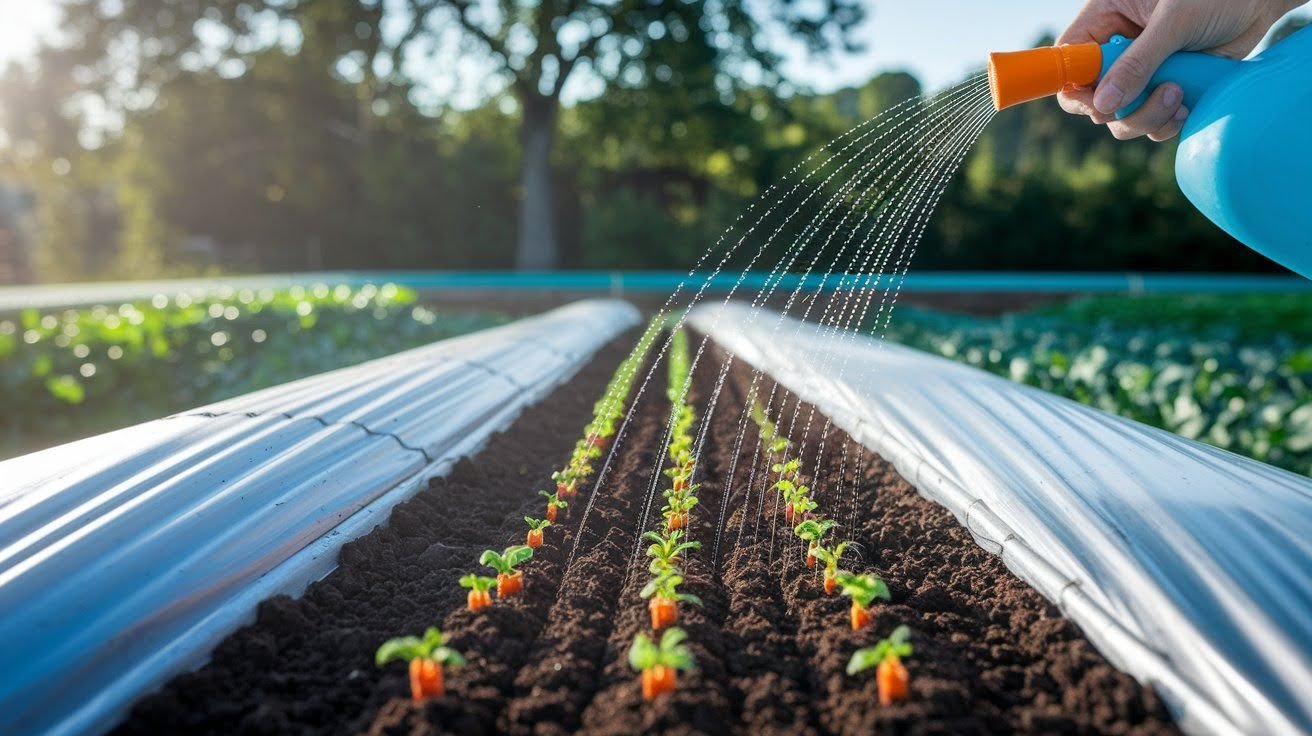
This is the single most important factor for getting early carrot sprouts: keeping the soil surface consistently moist for 2-3 weeks. Not soggy, not dried out, but evenly moist. Carrot seeds have a hard coating that needs constant moisture to soften and allow the sprout to emerge.
Check your seedbed daily during the germination period. The soil surface dries out quickly, especially in warm weather or windy conditions. Light watering once or even twice a day might be necessary.
I use floating row covers over my carrot beds during germination. These lightweight fabric covers help retain moisture, reduce watering frequency, and prevent the soil from forming a hard crust.
Watering Young Carrot Seedlings
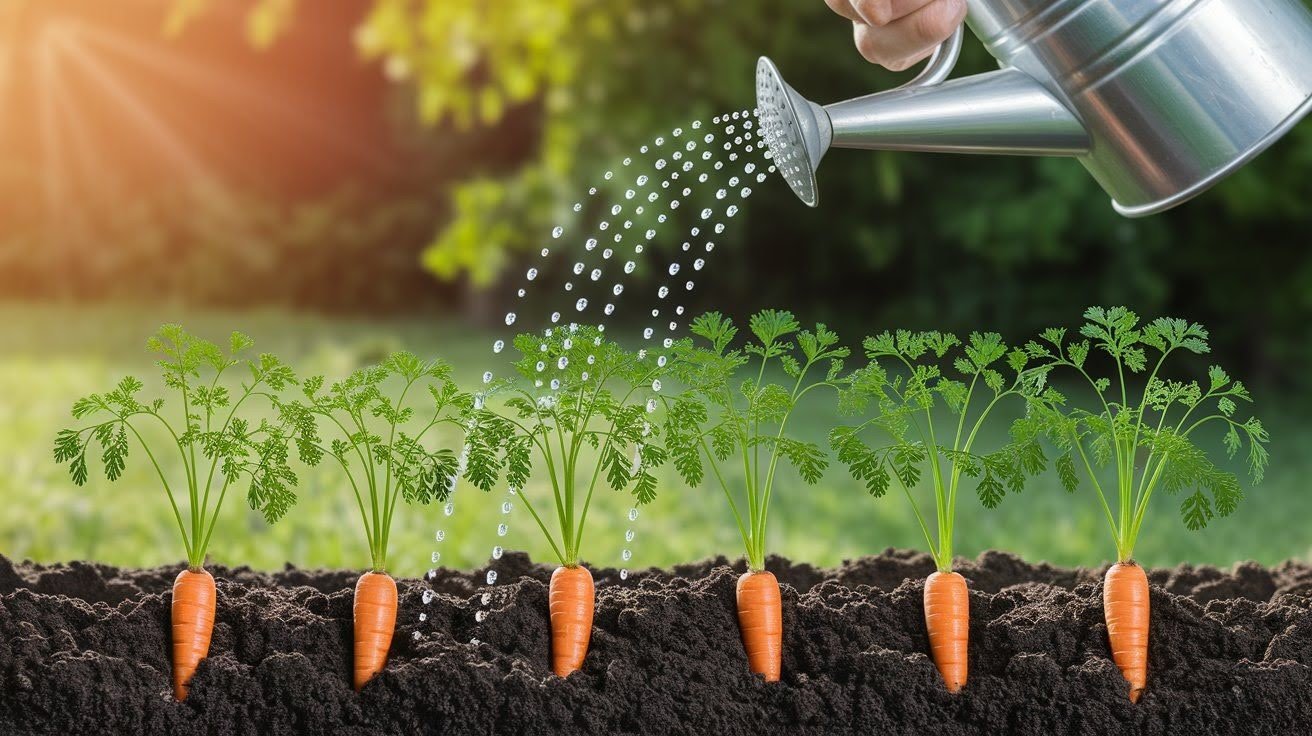
After your early carrot sprouts emerge, you’ll need to adjust your watering approach. The soil still needs to stay consistently moist, but you’re no longer focused only on the surface. Now you want moisture reaching down to those developing roots.
Water deeply but less frequently than during germination. Instead of light daily watering, water thoroughly every 2-3 days, depending on your weather. The top inch of soil should stay moist but never waterlogged.
Watch your seedlings for signs of moisture problems. Wilting or yellowing leaves often mean the soil is too dry. If seedlings look pale and weak with very wet soil, you might be overwatering. Finding the right balance takes practice, but your plants will tell you what they need.
Light Requirements for Carrot Sprouts
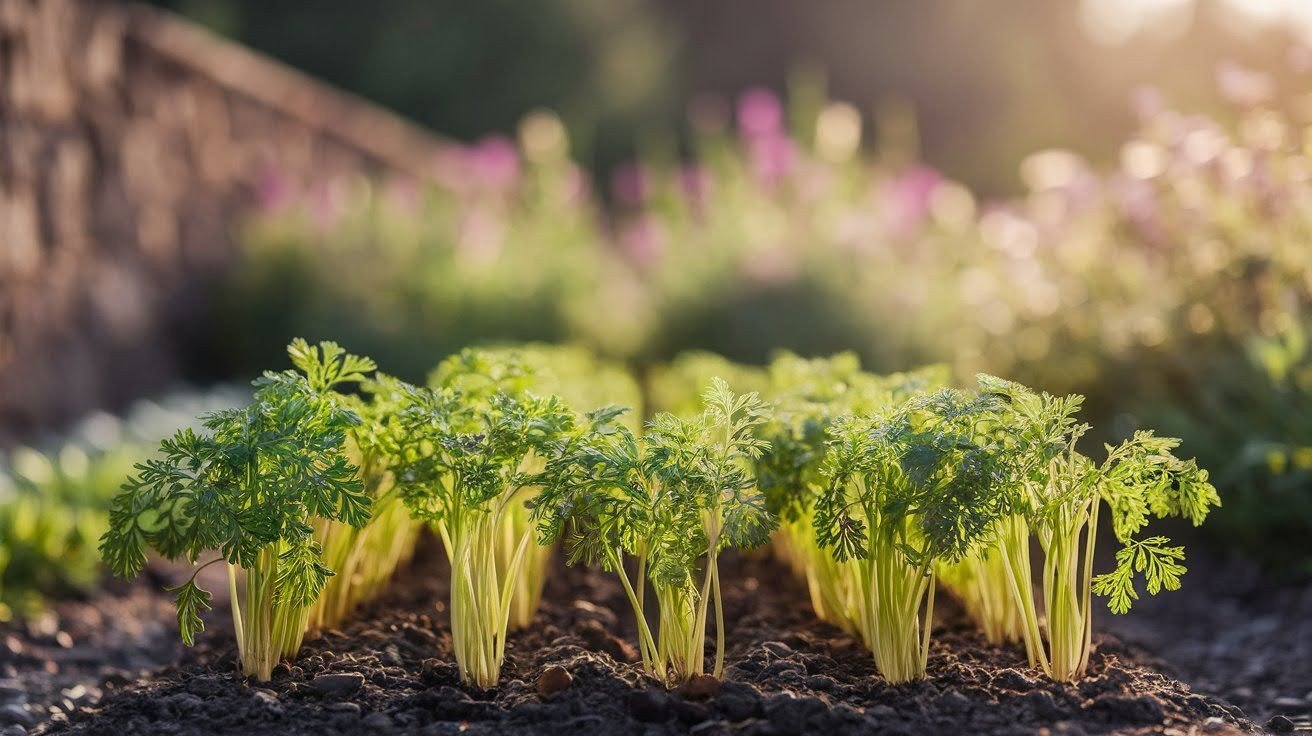
Carrots are sun-loving plants that need plenty of light to grow properly. Give your early carrot sprouts at least 6-10 hours of direct sunlight daily. In areas with very hot summers, a bit of afternoon shade can help, but morning sun is essential.
Insufficient light causes thin, weak growth and small carrots. The leaves might stretch and look pale as they search for more light. If you’re growing carrots in a spot that gets less than 6 hours of sun, consider moving your bed or choosing a different crop for that location.
Full sun provides the energy your carrot plants need to build healthy roots. The leaves collect sunlight and convert it to sugars that travel down to the growing carrot underground. More sun generally means sweeter, larger carrots at harvest time.
Temperature Management
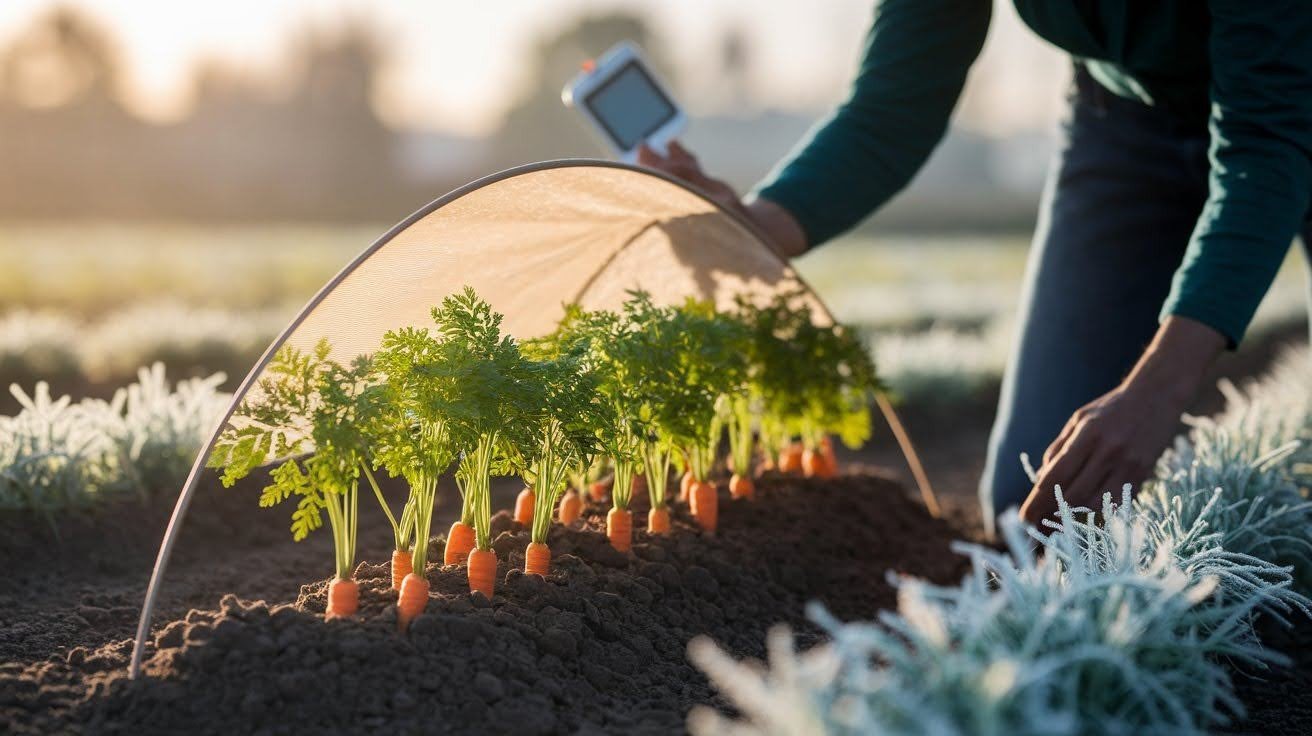
Carrots are cool-season crops that grow best when temperatures stay between 60-75°F. They can handle cooler weather quite well. In fact, light frosts actually make carrots taste sweeter. This is why many gardeners prefer fall-grown carrots over spring ones.
Your early carrot sprouts are more sensitive to temperature extremes than mature plants. Protect young seedlings from unexpected heat waves with shade cloth or row covers. In spring, be ready to cover your bed if a hard freeze is predicted.d
Hot weather above 85°F slows growth and can make carrots taste bitter. If you live in a warm climate, plant carrots for r fall harvest when temperatures are cooling down. The combination of warm soil for germination and cooler air for growth.
Tips for Identifying Early Root Problems
Catching root problems early helps you understand what’s happening underground and plan better for next season.
- Check for forked or split roots at harvest time: This usually means the developing carrot hit a rock, hard soil clump, or other obstacle and had to grow around it. The root splits into two or more “legs” instead of growing straight down.
- Look at your soil preparation if you get twisted carrots: Roots that spiral, curve, or bend indicate compacted soil or clay that the carrot couldn’t push through easily. Next time, work the soil deeper and add more sand or compost to improve texture.
- Notice if carrots are crowding each other as they grow: Roots that touch their neighbors often develop flat sides or grow crooked, trying to find space. This happens when you forget to thin seedlings.
- Pay attention to hairy roots or excessive side roots: These hair-like rootlets covering your carrots usually develop when soil conditions aren’t consistent. Swings between very wet and very dry soil cause this problem.
- Watch for stunted growth or very small carrots at harvest: This often indicates poor soil nutrition, not enough sun, or competition from weeds. Carrots don’t need heavy fertilizing, but they do need loose soil rich in organic matter.
Conclusion
The key to growing young carrot sprouts in your garden is reduced to three basic principles: they have to be planted shallowly, they need water regularly, and some patience is necessary. All you have to do is plop your seeds a little under the soil.
It is to be remembered that these original grass-like leaves are not the carrot leaves, but merely cotyledons performing their functions. The leaves, which are later formed of a feathery, frilly character, are indications that your plants are growing strong and well.
It is your time to grow carrots out of seed! These are simple steps that can be started by good soil preparation, then use these tips, and do not be discouraged that the first time can be a failure. Gardeners are not spared, as they may have a hard time with carrots.
Frequently Asked Questions
How long does it take for early carrot sprouts to appear?
Early carrot sprouts typically appear 14-21 days after planting, though some varieties sprout in 10 days with ideal conditions. Temperature and moisture affect timing significantly. Cooler soil slows germination, while warm, consistently moist soil speeds it up.
Why are my carrot seeds not sprouting?
Seeds planted too deep, dried-out soil, or a crusted soil surface prevent carrot seeds from sprouting. Other causes include old seeds with low viability, soil temperatures outside the 40-85°F range, or seeds washed away by heavy watering.
Can I speed up carrot seed germination?
Yes, pre-soaking seeds in water for 6-8 hours before planting can speed germination by a few days. Ensuring soil temperature stays between 55-65°F and keeping moisture consistent also helps. Using row covers to maintain warmth and moisture creates ideal conditions.
What’s the difference between cotyledons and true carrot leaves?
Cotyledons are the first grass-like leaves that emerge from early carrot sprouts, appearing long, thin, and smooth. True carrot leaves appear later and look frilly, feathery, and divided like miniature versions of mature carrot foliage.
How often should I water early carrot sprouts?
Water early carrot sprouts daily or even twice daily during germination to keep the soil surface consistently moist. After sprouts emerge, transition to deep watering every 2-3 days, allowing the top inch to dry slightly between waterings.