

Could your small raised bed handle both zucchini and tomatoes? Have you ever thought? A lot of gardeners are concerned about having enough space, but the solution is much simpler than they think.
Zucchini plants can certainly grow next to tomatoes in a square-foot garden. The key is that each plant should be given enough space to breathe and grow. If you arrange your layout properly, you will have enough harvest from both crops.
This article provides you with the knowledge on how to make it work. You will be informed about the spacing regulations, the wise planting suggestions, and the manner of avoiding the mistakes that result in the crowding of the plants that are not alive.
Yes, You Can Grow Zucchini in a Square Foot Garden, But It Needs Its Own Space
Zucchini can do really well in a square foot garden, but each plant needs one full square foot to itself. This gives the roots room to spread and the leaves space to grow without crowding neighbors.
While zucchini and tomatoes can both live in the same raised bed, they should never share the same square. Putting them together causes problems with airflow and competition for nutrients.
Both are sun-loving, warm-season crops that enjoy similar growing conditions. This makes them great bed companions when you space them properly. Give each plant its own square, and they’ll both reward you with lots of produce.
Growing Zucchini and Tomatoes Together: Smart Companion Planting
When you grow these two plants together in the same bed, you’re practicing companion planting that can benefit both crops if done correctly.
Benefits of Pairing Zucchini with Tomatoes
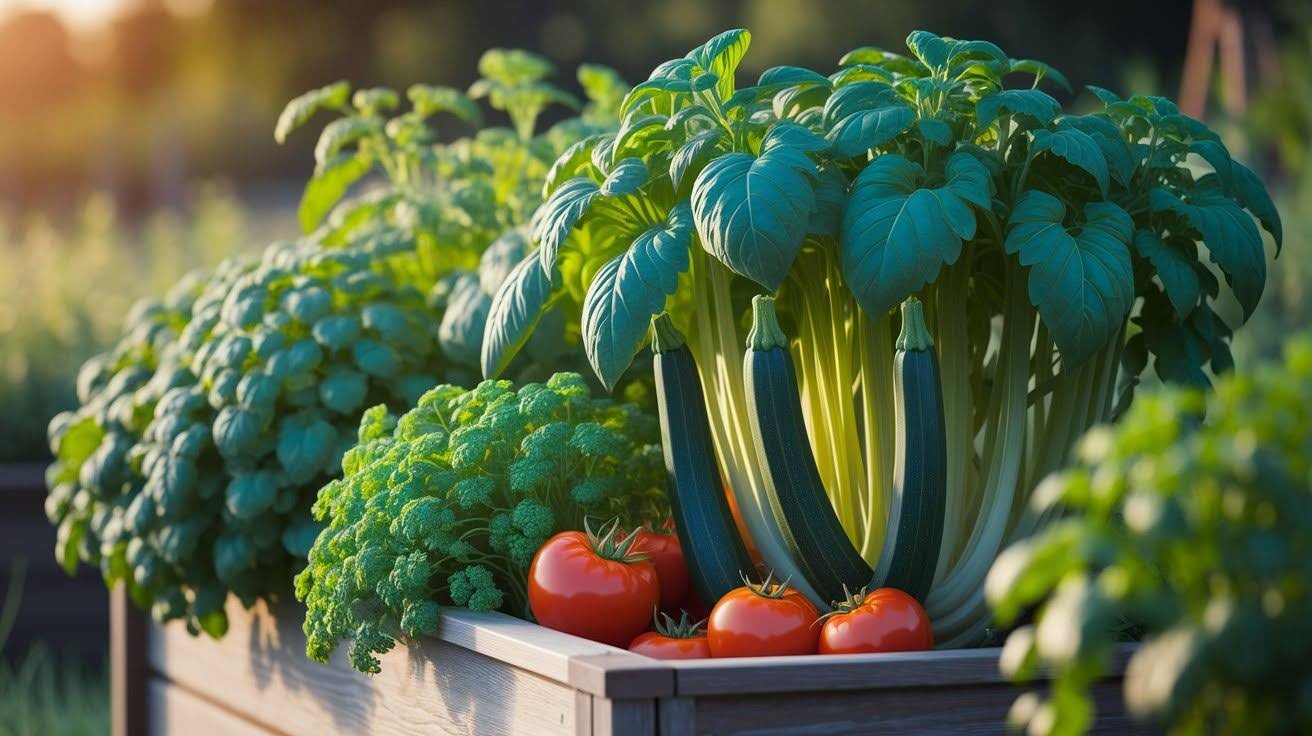
Both plants love full sunlight for at least 6-8 hours per day. They also prefer warm temperatures above 60°F and need consistent watering to produce well.
Their shared soil and watering needs make daily garden care much easier. You can water and fertilize both plants at the same time with the same schedule.
Adding companion herbs like basil, parsley, or nasturtiums around them helps repel common pests. These herbs can also improve the flavor of your tomatoes and attract helpful pollinators for your zucchini flowers.
Potential Issues to Watch For
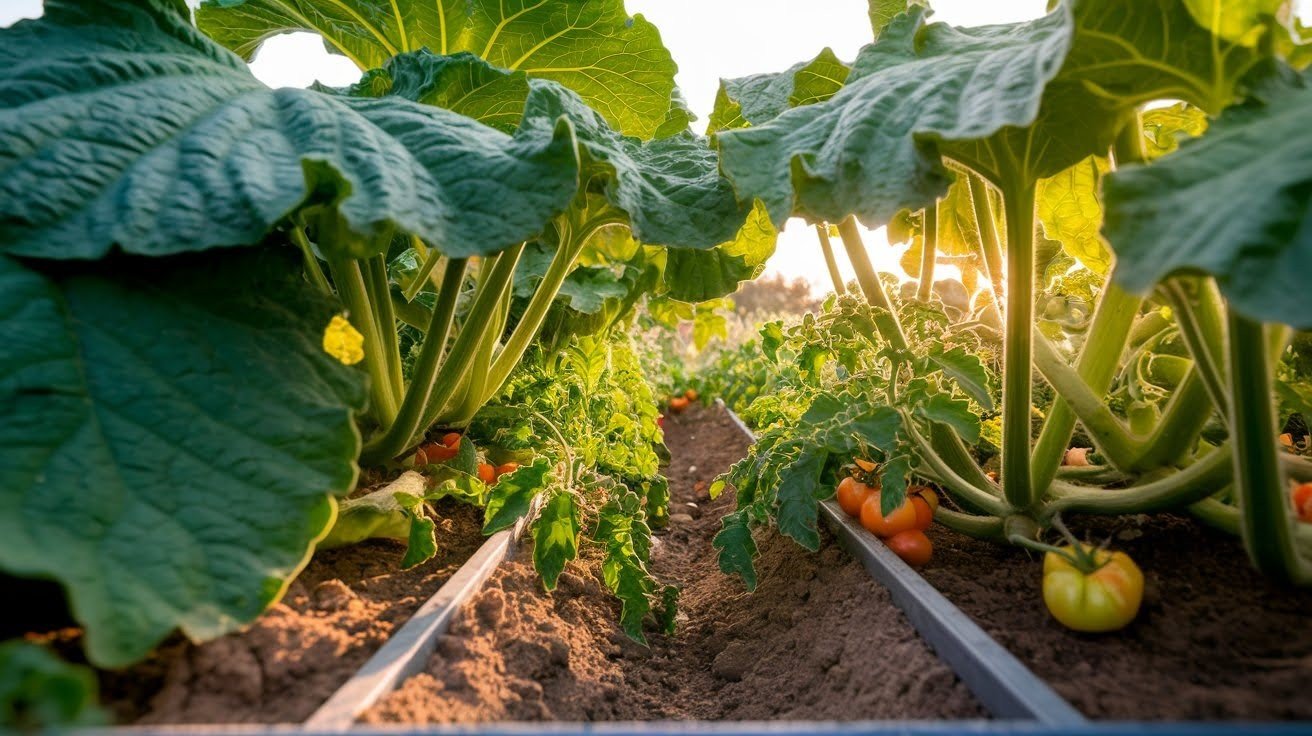
Zucchini leaves grow large and can easily block sunlight from reaching your tomato plants. This causes tomatoes to produce fewer fruits and grow more slowly.
When plants are too close together, diseases like powdery mildew or blight spread faster. The lack of air movement between leaves creates damp conditions where fungus thrives.
In small raised beds, both plants compete for the same nutrients in the soil. This competition can reduce how much food each plant produces, leaving you with smaller harvests from both.
Choosing the Right Varieties for Limited Space
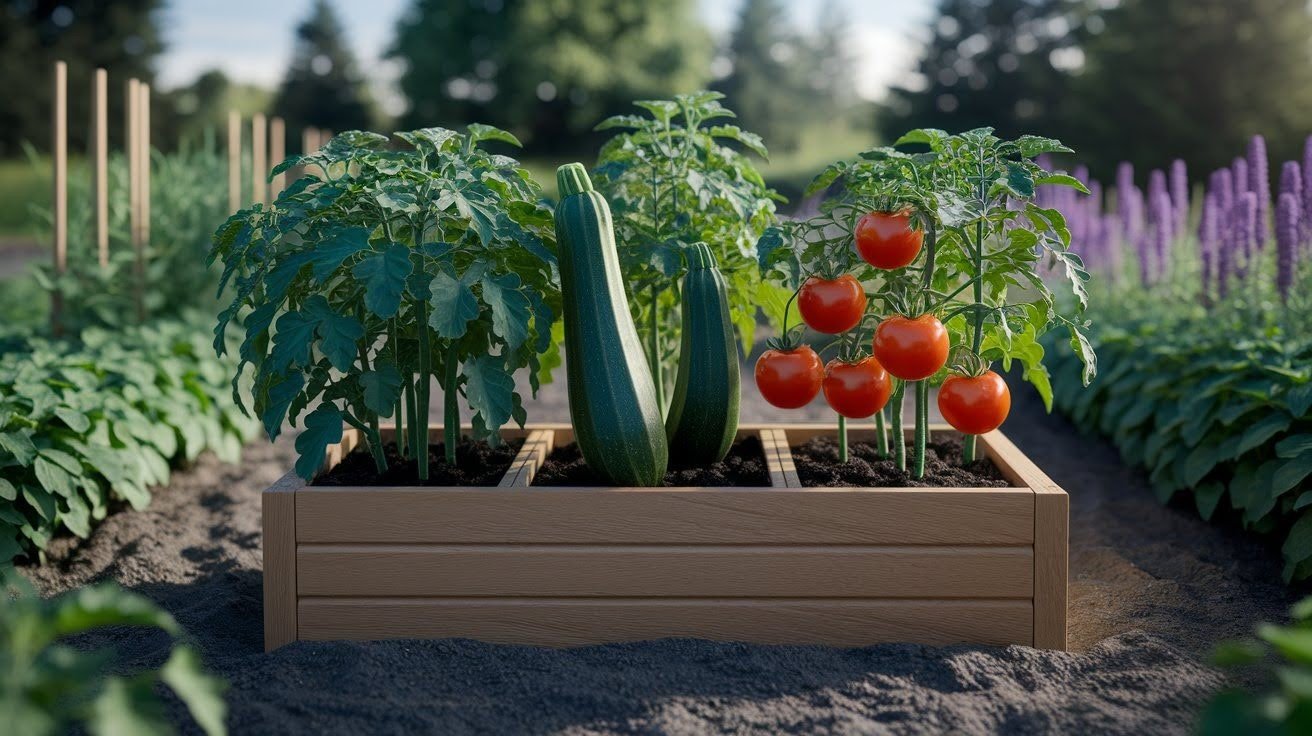
Pick bush or compact zucchini varieties like ‘Raven’ or ‘Eight Ball’ for square foot gardening. These stay smaller than traditional varieties and are easier to control in tight quarters.
For tomatoes, determinate varieties work best in small spaces because they stop growing at a certain height. Cherry tomatoes on stakes also work well and take up less room than large beefsteak types.
Avoid planting both vining tomatoes and sprawling zucchini in the same small bed. The combination creates too much leaf growth and makes it hard to reach plants for harvesting.
Managing Water and Fertilizer Needs
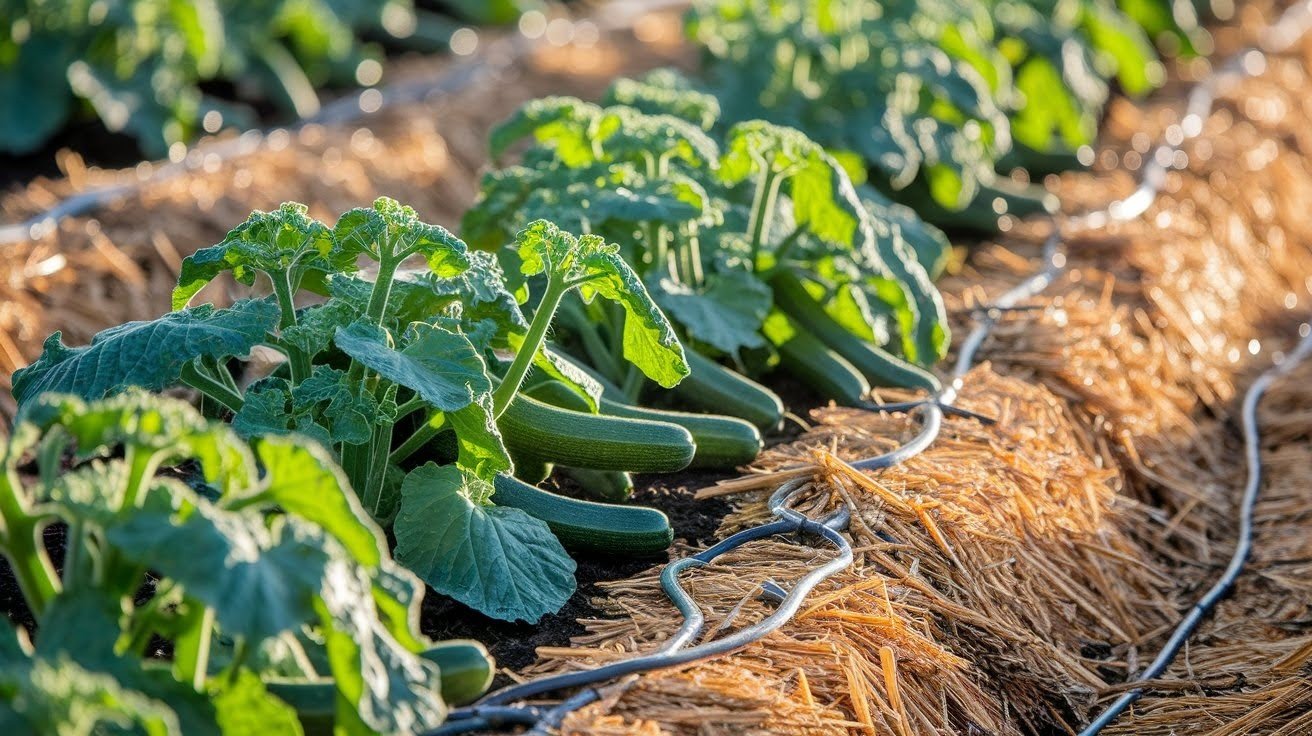
Both crops need about 1-2 inches of water per week during the growing season. Drip irrigation or soaker hoses work better than overhead watering because they keep leaves dry.
Feed both plants with a balanced fertilizer every 3-4 weeks during active growth. Too much nitrogen makes plants grow lots of leaves but fewer fruits.
Mulching around both plants helps keep the soil moist and reduces how often you need to water. A 2-3 inch layer of straw or shredded leaves works great.
Supporting Plants Vertically
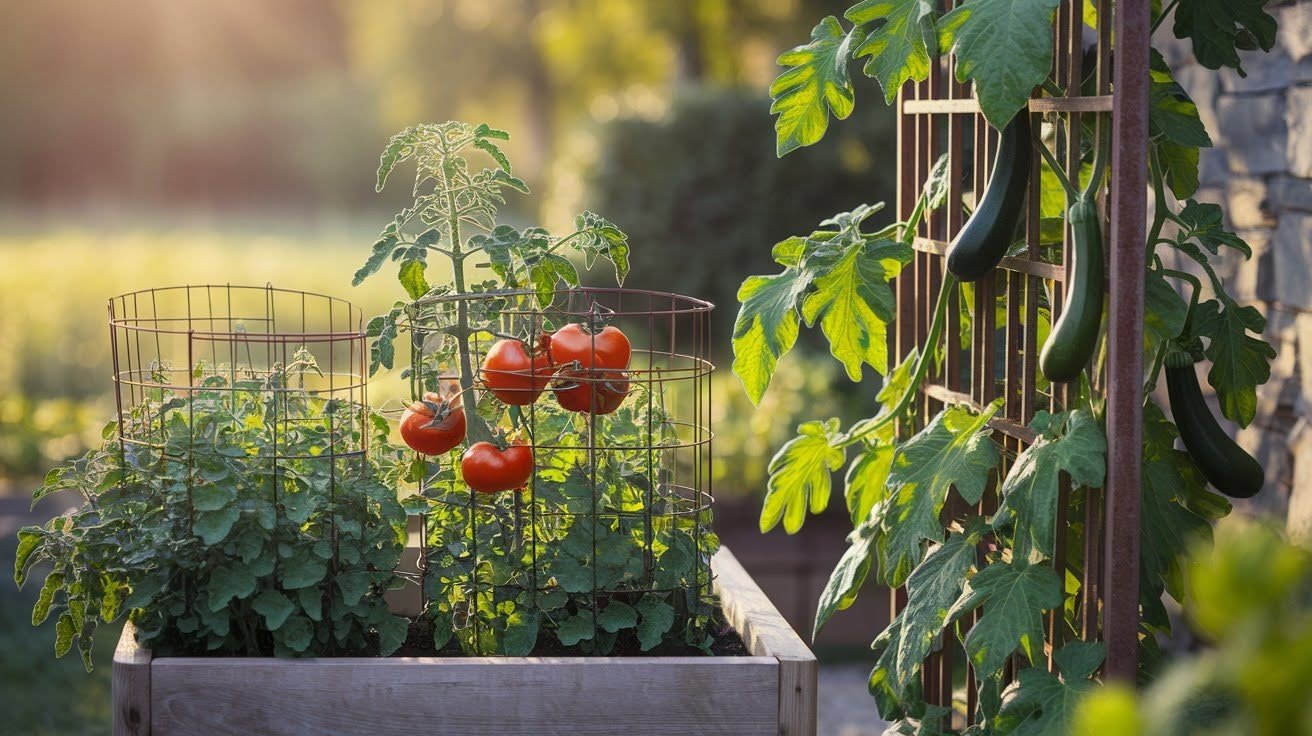
Training tomatoes up cages or stakes keeps them from spreading into the zucchini space. This vertical growth also makes harvesting easier and improves air circulation around plants.
You can also grow zucchini vertically by tying the main stem to a strong trellis. This works better with some varieties than others, so check seed packets before trying.
Vertical growing lets you fit more plants in the same bed. It also keeps fruits off the ground, where they can rot or be eaten by pests.
Timing Your Planting
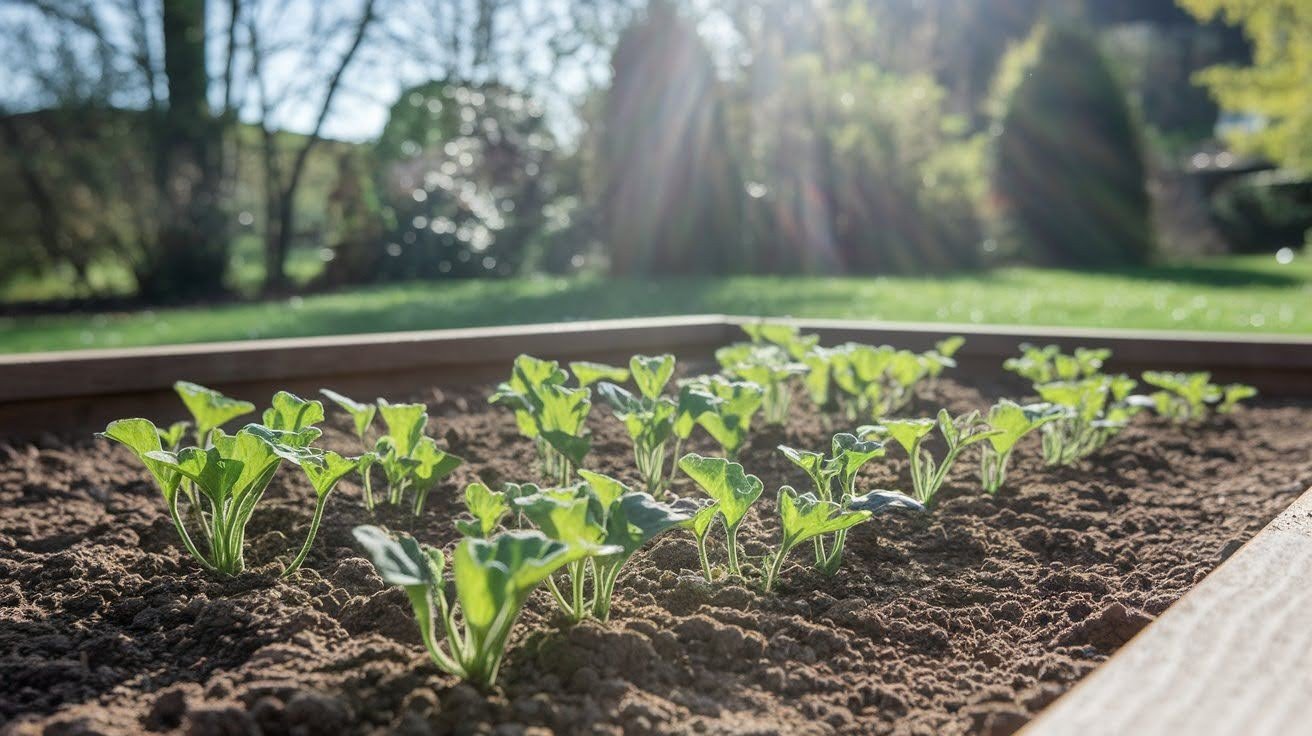
Plant both zucchini and tomatoes after the last spring frost when the soil is at least 60°F. Cold soil slows growth and can cause root problems for both crops.
Zucchini grows faster than tomatoes and will be ready to harvest first. Plant tomatoes 1-2 weeks before zucchini if you want them to mature at similar times.
Stagger plantings every 2-3 weeks to extend your harvest season. This keeps fresh vegetables coming all summer instead of getting too much at once.
Monitoring for Pests and Diseases
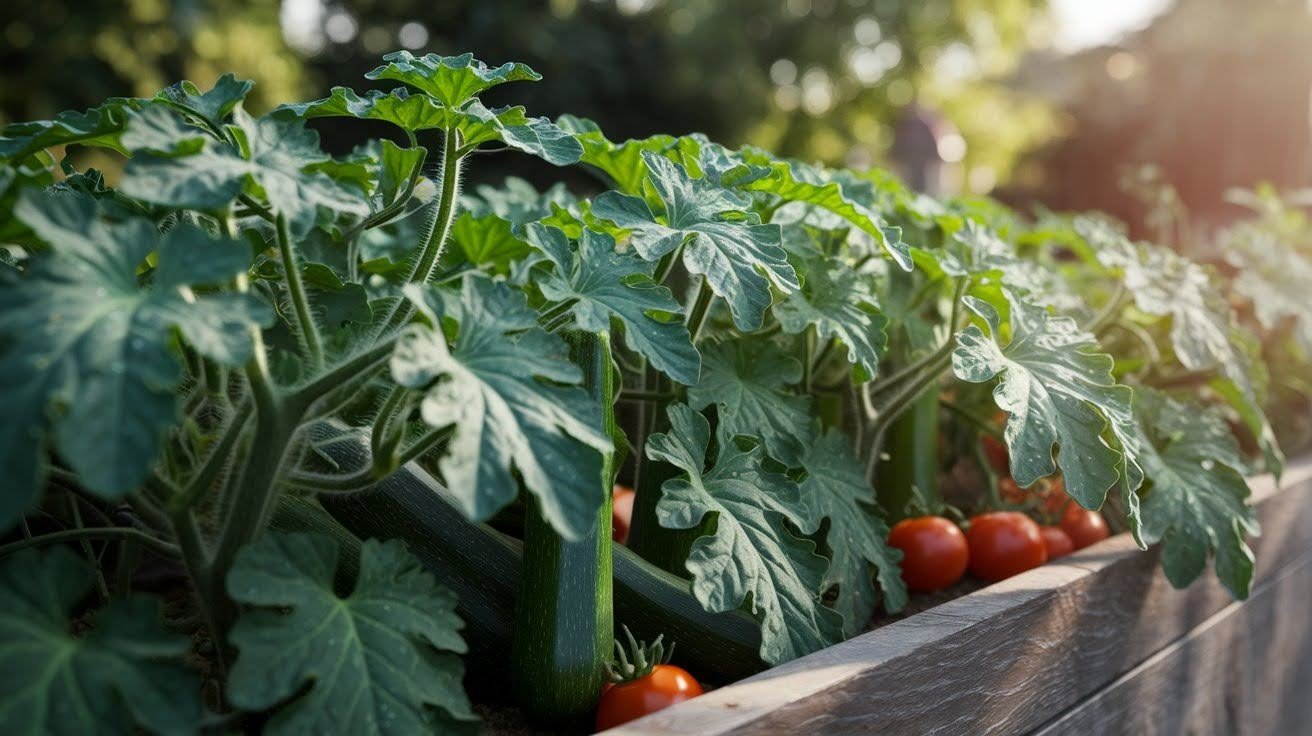
Check plants daily for signs of pests like squash bugs, aphids, or tomato hornworms. Early detection makes control much easier before populations explode.
Remove any yellow or spotted leaves right away to prevent disease spread. Dispose of sick leaves in the trash, not your compost pile.
Keep the area around plants clean and free of plant debris. Old leaves and fallen fruits create hiding spots for pests and disease spores.
Knowing When to Harvest
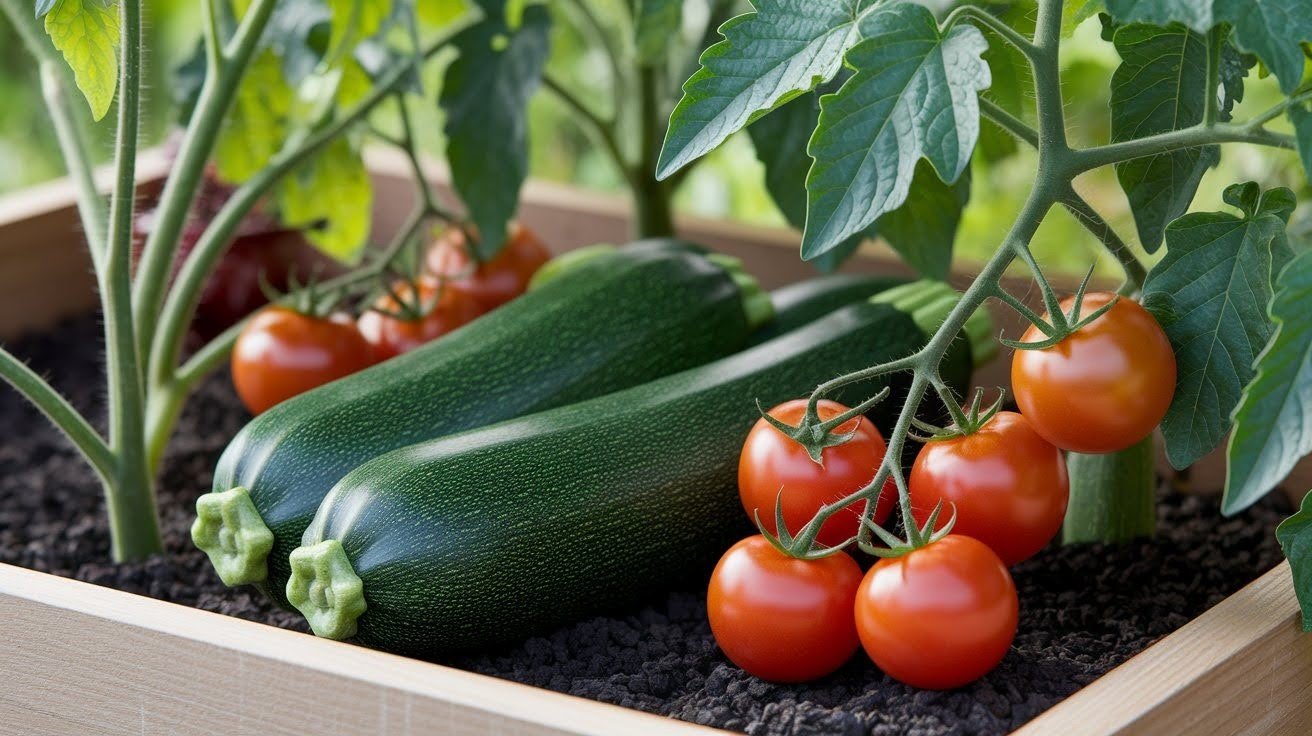
Pick zucchini when they’re 6-8 inches long for the best flavor and texture. Letting them grow too large makes them tough and slows down new fruit production.
Harvest tomatoes when they’re fully colored but still slightly firm. They’ll continue ripening after picking if you need to harvest early.
Check plants every 1-2 days during peak season. Frequent harvesting tells the plant to keep making more fruits instead of going to seed.
Creating the Perfect Balance Between Zucchini and Tomatoes

From my own raised bed experience, the secret to keeping both plants happy is balance. I’ve learned that giving zucchini a little extra space on the outer edge of the bed makes a huge difference.
I also like to place my tomato cages slightly angled away from the zucchini squares. This small tweak improves airflow and keeps both plants dry after watering or rain. Good airflow has saved my crops from mildew more than once, especially during humid spells.
Lastly, I’ve found that interplanting low-growing herbs like thyme or oregano between the two helps fill unused soil space and keep weeds down. Plus, those herbs bring in pollinators, and nothing beats the fresh scent when you brush past them in the garden.
Best Raised Bed Layout for Zucchini and Tomato
Planning your bed layout before planting saves headaches later and helps both crops produce their best. Start with a 4×4-foot or 4×8-foot raised bed for square foot gardening, zucchini, and tomato combinations. Place one zucchini plant in a corner square where it has room to spread slightly.
Put tomato plants diagonally opposite the zucchini with cages or trellises for support. This spacing keeps the large zucchini leaves from blocking light to the tomatoes. Fill the center or border squares with helpful companion plants like basil, marigolds, or carrots.
Tools like the Garden Grid™ help you visualize spacing and keep plants organized as they grow. These grids also make watering specific squares easier without wasting water on empty spots. Remember to rotate where you plant each crop every season.
Tips for Thriving Zucchini in Compact Spaces
Making the most of limited garden space requires some smart techniques that keep plants healthy and productive.
- Prune lower leaves regularly: To improve airflow around the base of plants. Remove any leaves touching the soil to prevent rot and fungal diseases from spreading.
- Train main stems upward: Using a sturdy trellis or heavy-duty stakes. Tie stems loosely with soft cloth strips to avoid damaging the plant as it grows.
- Apply 2-3 inches of mulch: Around plants to keep soil moist longer. Mulch also prevents weeds from competing for nutrients and keeps fruits clean.
- Harvest zucchini every 1-2 days: Once production starts. Frequent picking signals the plant to keep making more flowers and fruits all season long.
- Feed plants monthly: A balanced fertilizer like 10-10-10. Heavy producers like zucchini need regular feeding to support all that fruit growth.
- Water deeply but less often: Instead of shallow daily watering. This encourages roots to grow down deep where the soil stays moist longer.
- Hand-pollinate flowers: Early in the season, if you don’t see many bees. Use a small brush to transfer pollen from male flowers to female flowers (the ones with tiny fruits attached).
Common Square Foot Gardening Mistakes
Learning from common errors helps you avoid problems before they hurt your harvest.
| Mistake | Why It’s a Problem | How to Fix It |
| Planting zucchini and tomatoes in the same square | Both plants need their full square foot for roots and leaves to develop properly | Always give each plant its own square, even if they seem small at first |
| Ignoring spacing guidelines from seed packets | Crowded plants compete for light, water, and nutrients, producing less food | Follow the 1 plant per square foot rule for square foot gardening, zucchini, and similar large crops |
| Letting zucchini sprawl without pruning | Large leaves shade neighboring plants and reduce airflow, increasing disease risk | Prune lower leaves weekly and train stems upward when possible |
| Skipping crop rotation each year | Planting the same crops in the same spots depletes specific nutrients and builds up diseases | Move each plant family to a different section of your bed each season |
| Overwatering or underwatering | Inconsistent moisture causes blossom end rot, split fruits, and poor growth | Use a moisture meter or stick your finger 2 inches deep to check before watering |
| Using only one zucchini plant | A single plant can produce well, but you risk losing your whole crop if disease strikes | Plant 2-3 plants in different squares for better pollination and backup production |
| Forgetting to feed heavy feeders | Zucchini and tomatoes remove lots of nutrients from the soil and need regular feeding | Apply balanced fertilizer monthly and add compost between seasons |
Conclusion
Square foot gardening zucchini plants are capable of producing great harvests even in small raised beds. The secret is to respect the space requirements of each plant and not to try to cram too many plants into a few squares.
If you cultivate zucchini with tomatoes, make sure that each crop has its own square foot for roots and air circulation. Achieving the growth vertically and pruning regularly gives both plants the possibility to grow without competing for light or nutrients.
Firstly, plan your layout before planting and after done successfully, then use the companion plants for good, and finally, rotate the crops every year. These easy steps result in healthy vines, a large number of vegetables, and a very good utilization of the garden space.
Frequently Asked Questions
How many zucchini plants fit in a 4×4 raised bed?
You can fit 4 zucchini plants in a 4×4 bed with one plant per square foot. However, leaving some squares for companion plants and tomatoes creates a healthier, more productive garden overall.
Can zucchini and tomatoes share water and fertilizer?
Yes, both crops need similar watering schedules and benefit from balanced fertilizer applications. Water deeply when the top 2 inches of soil feel dry, and feed monthly during active growth periods.
What happens if I plant zucchini too close to tomatoes?
Overcrowding causes poor airflow, increased disease risk, and competition for nutrients. The large zucchini leaves will also shade tomatoes, reducing their fruit production and overall plant health significantly.
Do I need to hand-pollinate zucchini in small gardens?
Early in the season, when bee activity is low, hand-pollination helps ensure good fruit set. Use a small brush to move pollen from male flowers to female flowers each morning.
How often should I harvest zucchini in square-foot gardens?
Check plants every 1-2 days and harvest when fruits reach 6-8 inches long. Frequent harvesting encourages continued production and prevents fruits from getting tough or taking energy from new growth.