
I’ll never forget the first time my lawn turned completely brown. I panicked and thought I’d killed my entire yard. Turns out, I was worrying over nothing.
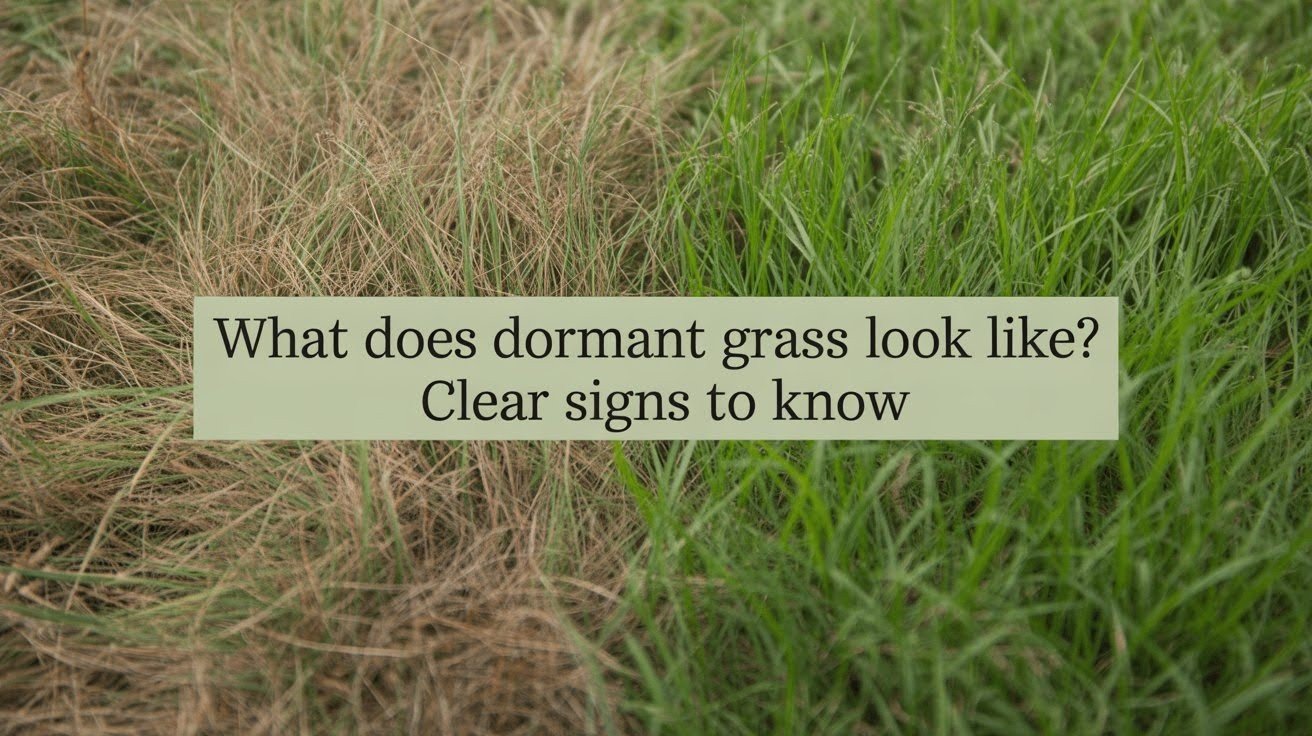
Brown grass doesn’t always mean dead grass. In fact, your lawn might just be taking a nap. This natural process is called dormancy, and it’s how grass protects itself during harsh weather.
In this post, you’ll learn exactly what dormant grass looks like and how to tell it apart from grass that’s actually dead. Understanding these differences can save you hundreds of dollars and countless hours of unnecessary work. Plus, you’ll stop stressing every time your lawn changes color.
What Does Dormant Grass Look Like?
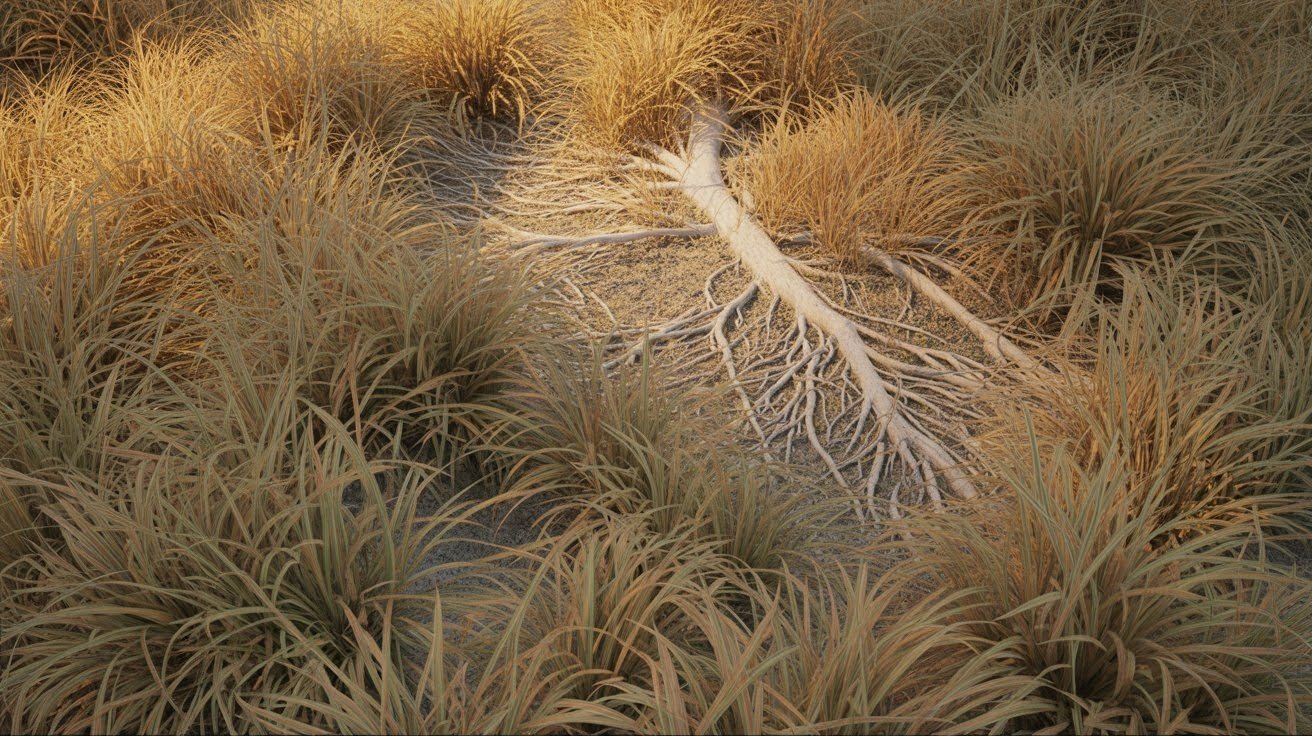
When grass goes dormant, it turns brown, tan, or a golden yellow color. The change usually happens across your entire lawn at the same time, not just in random spots. This uniform color change is one of the first signs you’re looking at dormant grass, not dead grass.
The blades will look dry, but they stay attached to the ground. If you check the roots underneath, they’ll still be white or cream colored and feel firm when you touch them. This is a good sign that your grass is just resting.
Your lawn might seem like it’s sleeping rather than dying. The texture stays somewhat bendy, not completely brittle like straw. This happens during extreme weather, usually hot summers or freezing winters. The good news? Dormancy is temporary. With the right care, your grass will come back green when conditions improve.
What Does Dead Grass Look Like?
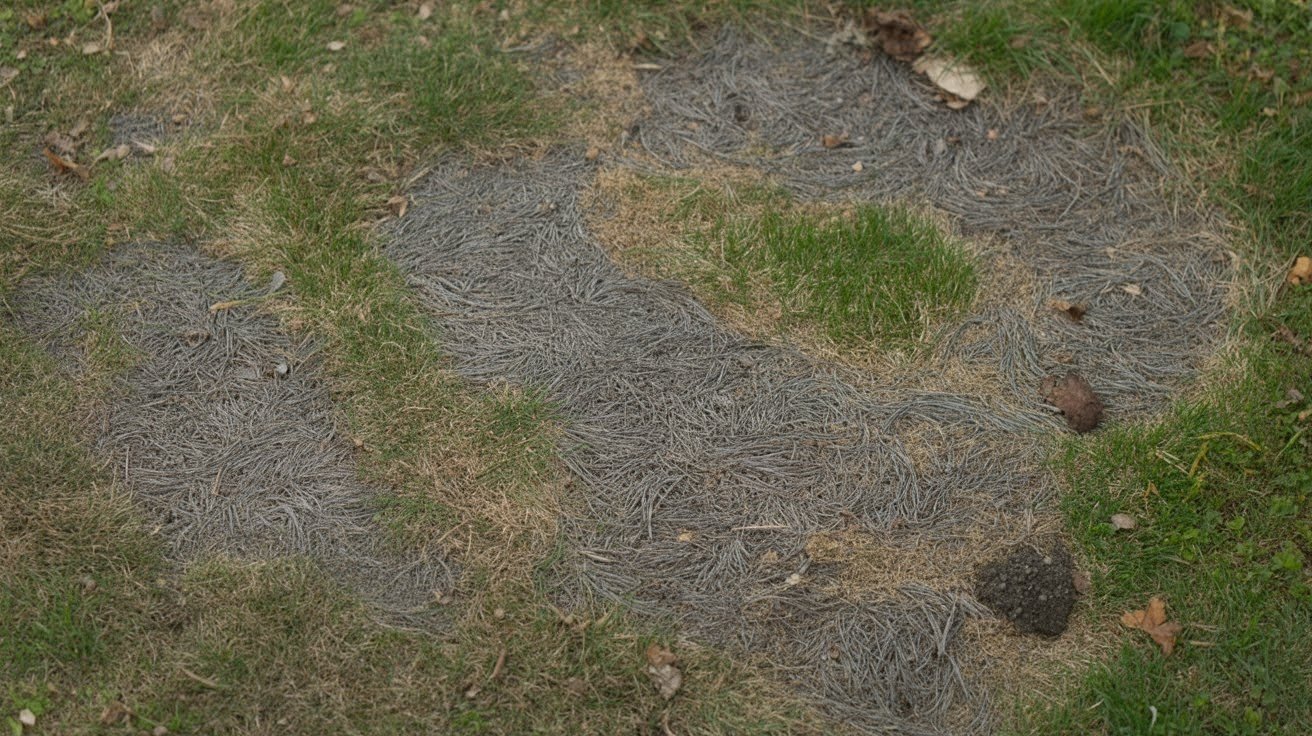
Dead grass looks completely lifeless. The blades turn a dull gray-brown color that looks dried out and straw-like. When you look at your lawn, dead patches stand out because they’re much darker and rougher than the areas around them.
The texture feels brittle and crunchy when you touch it. Dead grass breaks apart easily in your hands, almost like dry hay. When you walk across it, you’ll hear it crack under your feet. There’s no flexibility left in the blades at all.
The biggest giveaway is that dead grass pulls right out of the ground with almost no effort. The roots have stopped working, so nothing holds the grass in place anymore. Sometimes you’ll see bare dirt showing through where the dead grass has already fallen away. Unlike dormant grass that covers your whole lawn evenly, dead grass shows up in random spots where something specific went wrong.
7 Key Differences Between Dormant and Dead Grass
Knowing what dormant grass looks like helps you avoid making costly mistakes. Here are seven ways to tell the difference.
Color and Appearance
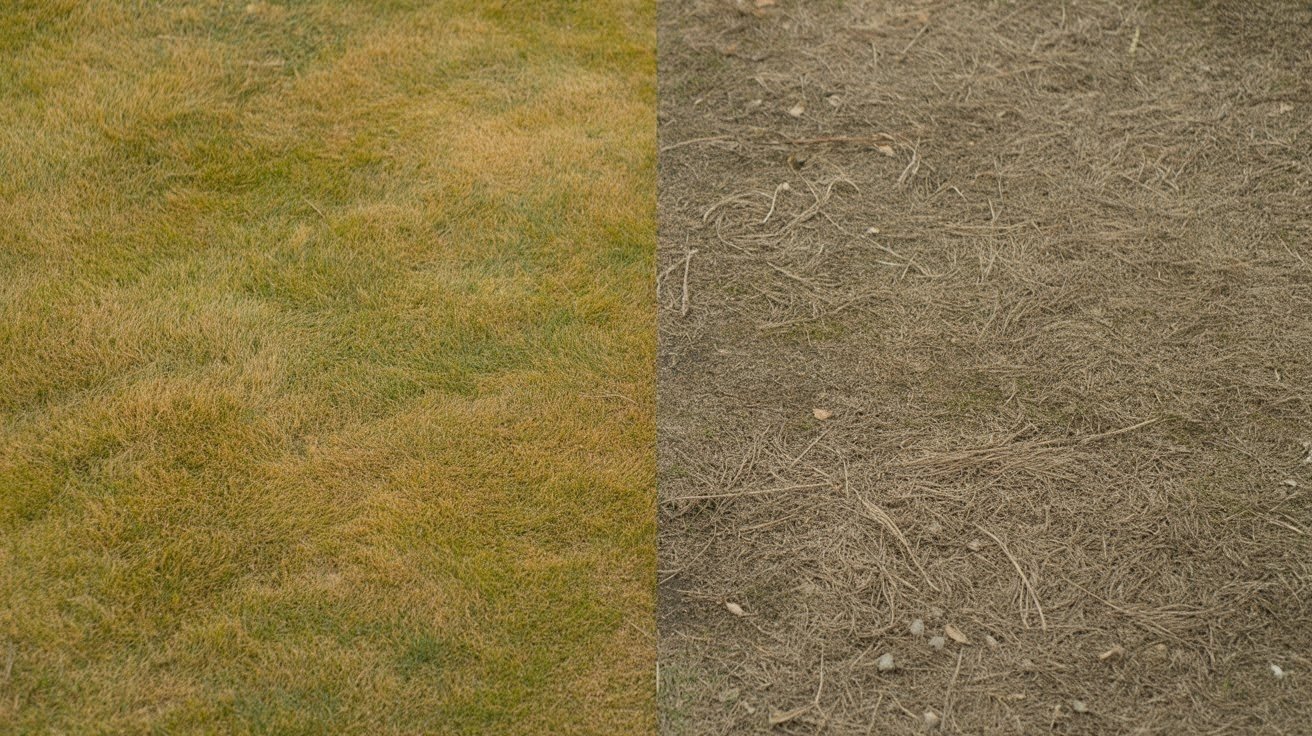
Dormant grass turns an even shade of brown or golden yellow across your whole lawn. The color stays pretty consistent from one area to another. You won’t see random patches or weird patterns.
Dead grass, on the other hand, shows up in uneven, patchy brown spots. It has a straw-like look that seems dull and lifeless. The color is usually a gray brown that looks completely dried out.
When you’re trying to figure out what dormant grass looks like, remember that consistency matters. Even coloring usually means dormancy, while patchy areas suggest real problems.
Root System Health
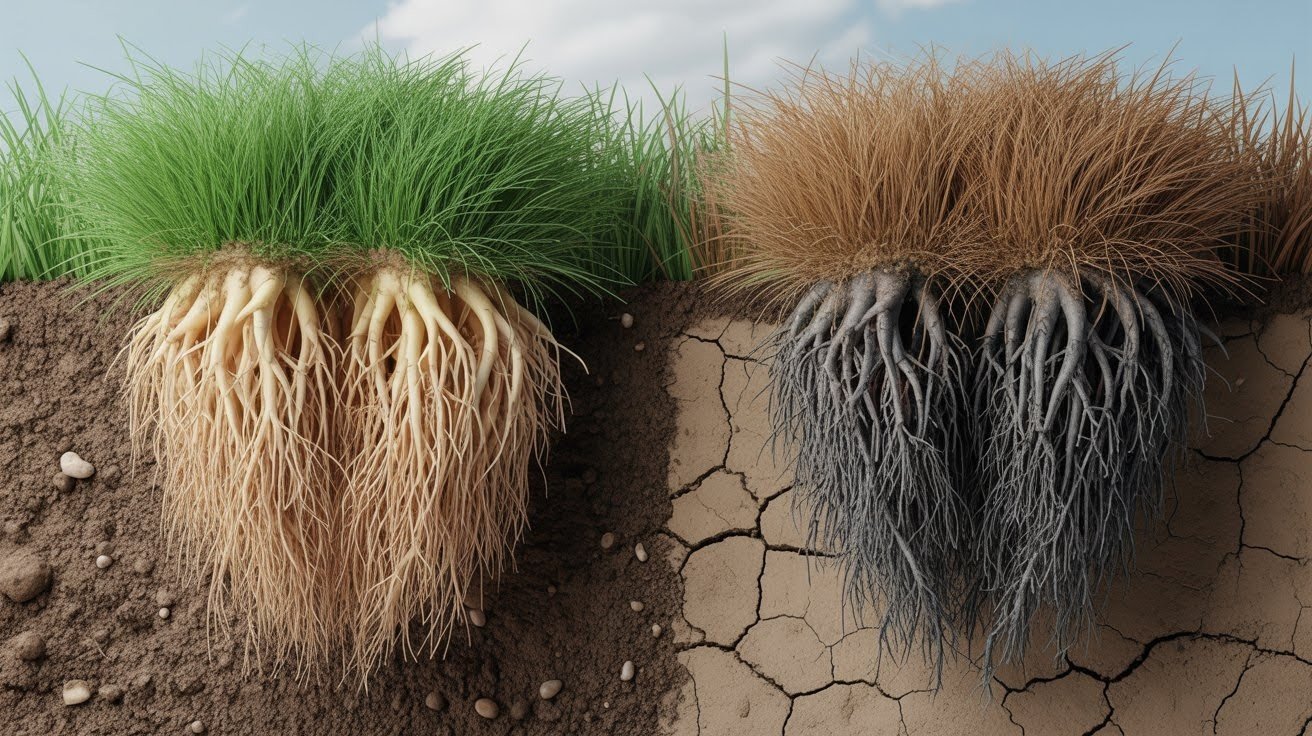
The roots tell you everything you need to know. Pull up a small section of brown grass and check what’s underneath. Dormant grass has roots that are white or cream colored. They feel firm and healthy in your hands.
Dead grass roots look completely different. They’re brittle, gray, or black. When you touch them, they break apart easily. Sometimes they crumble between your fingers.
To do this test, just grab a small handful of grass and pull gently. Look at what comes up. The root system is the most reliable way to tell if your grass is dormant or dead.
Pattern Across Your Lawn
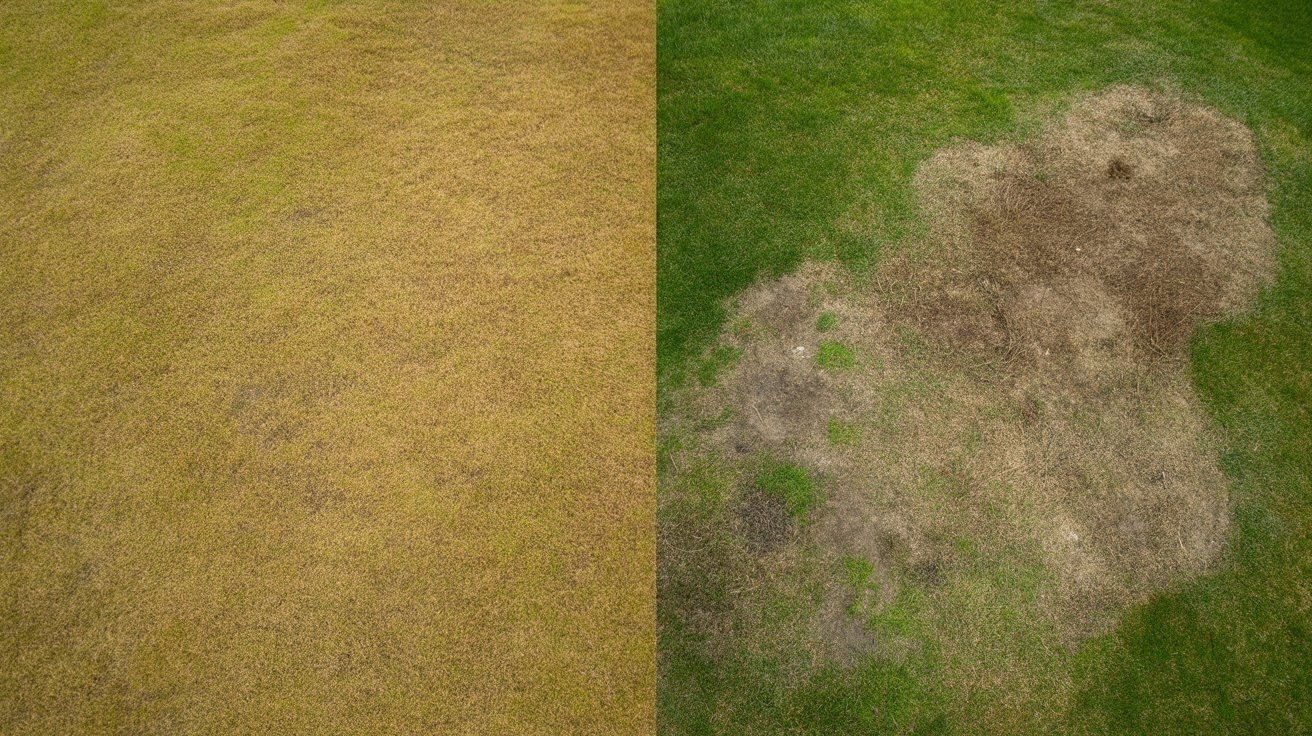
Dormant grass affects your whole lawn at once. You’ll notice the entire yard going brown around the same time. This uniform pattern is normal and natural.
Dead grass shows up in specific patches or areas. These dead spots don’t follow any pattern. They just appear where something went wrong, maybe disease, bugs, or damage from pets or chemicals.
When the browning is uniform, it’s usually the natural dormancy process. Your grass is responding to weather conditions, not dying from a problem.
Response to Watering
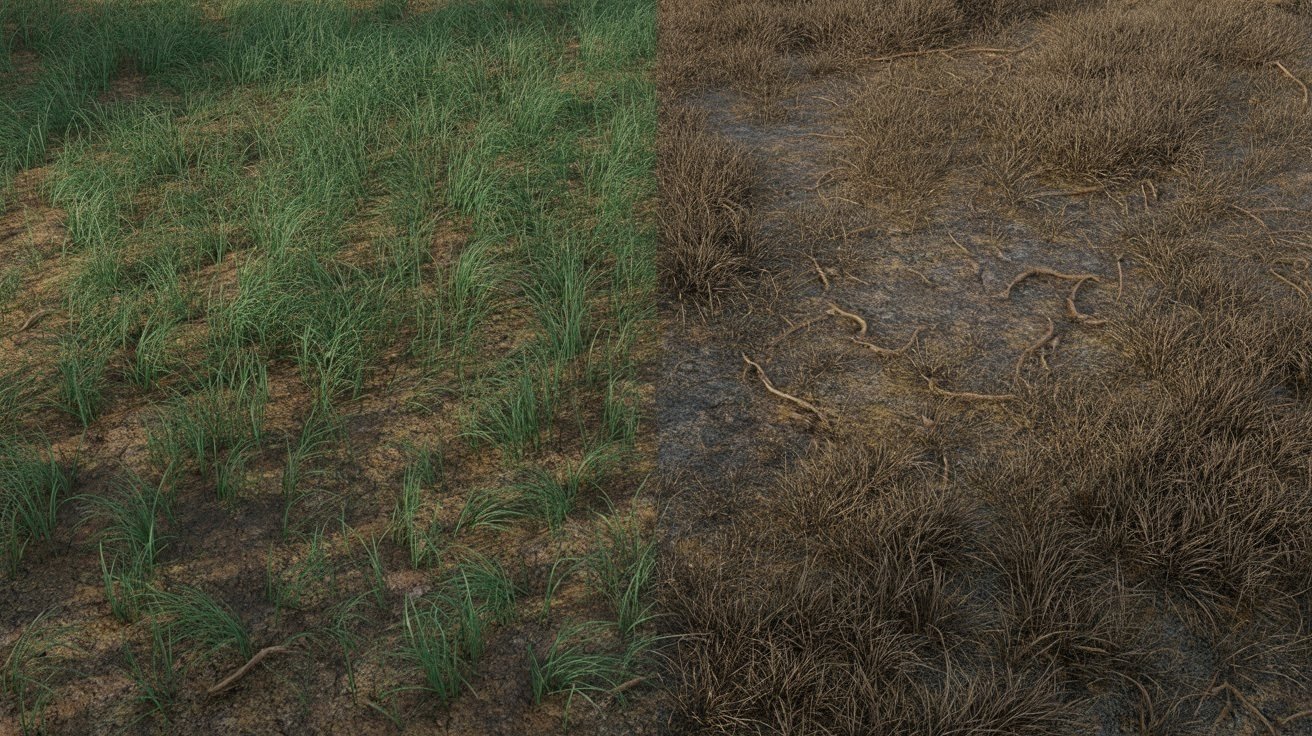
Here’s a simple test anyone can do. Water your brown grass regularly for one to two weeks. Dormant grass will start turning green again. You’ll see new growth and color coming back.
Dead grass won’t respond, no matter how much water you give it. It stays brown week after week. This water test is one of the easiest and most effective ways to check your lawn’s health.
If you’re still wondering what dormant grass looks like after watering, just wait. Dormant grass “wakes up” when it gets enough moisture. Dead grass stays the same.
Seasonal Timing
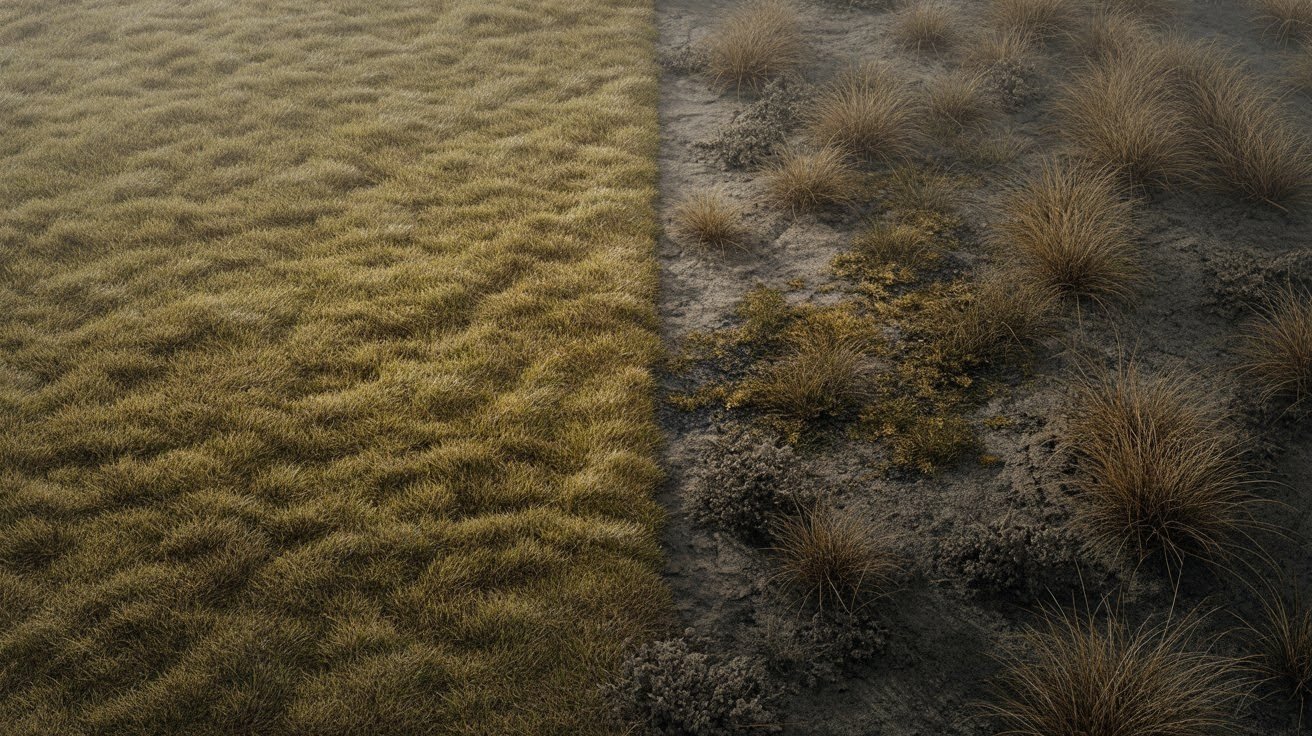
Dormant grass follows predictable patterns based on weather. Cool-season grasses like Kentucky bluegrass go dormant in winter when soil temperatures drop below 45°F. They can also go dormant during really hot summers.
Warm-season grasses like Bermuda only go dormant in winter when the soil gets below 55°F. They love heat and handle summer just fine.
Dead grass can happen anytime throughout the year. It doesn’t follow seasonal patterns. If your grass turns brown in spring or fall when temperatures are mild, that’s a red flag.
Texture and Feel
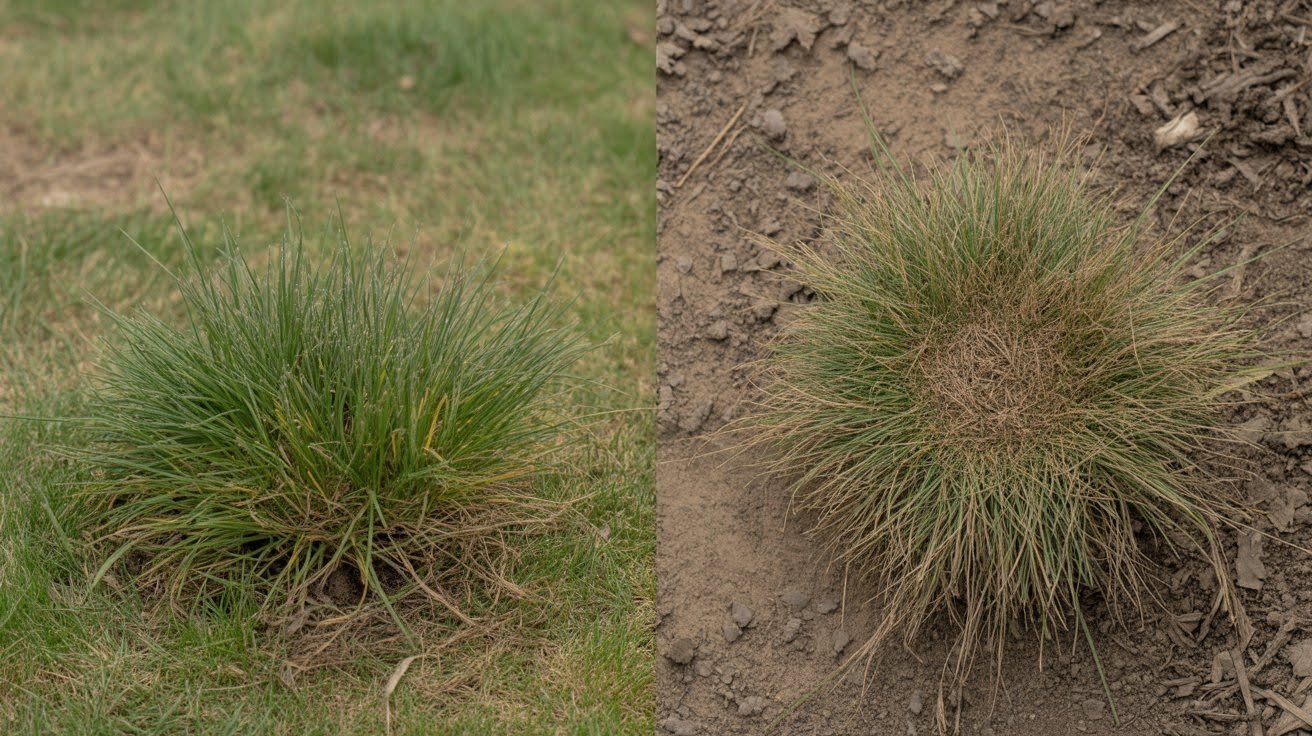
Walk on your brown lawn and pay attention to how it feels. Dormant grass is somewhat bendy. It springs back a little when you step on it or touch it. There’s still some life and flexibility in the blades.
Dead grass feels completely different. It’s dry, brittle, and rough. You’ll hear it crunch under your feet. The blades break easily when you handle them.
This texture test is quick and easy. Dormant grass maintains some flexibility. Dead grass crumbles in your hands.
Growth Stage Indicators
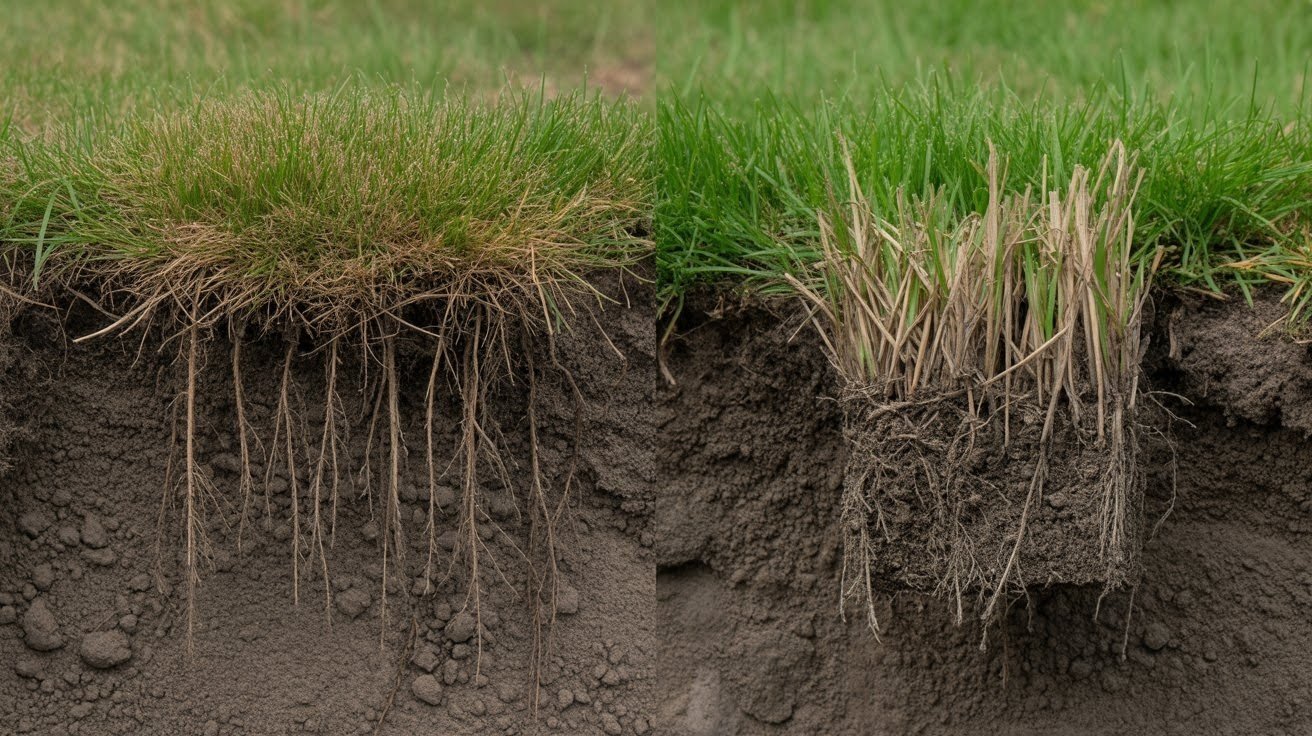
Try the “tug test” on your brown grass. Grab a small section and pull. Dormant grass is still firmly rooted in the ground. You’ll need to use some force to pull it up.
Dead grass comes out with almost no effort. It has no real connection to the soil anymore. Sometimes it just lifts right off the ground.
This test works because dormant grass maintains its structure. The roots are still working and holding everything together, even though the top looks brown.
Tips for Testing Your Grass
Not sure if your brown lawn is dormant or dead? Here are some practical ways to find out.
Start by doing a few simple tests. These don’t require any special tools or expertise. Just your hands and a little patience.
- Try the Tug Test: Gently pull on the grass in the brown areas. It should resist and stay in the ground if it’s dormant. Dead grass pulls out easily.
- Check the Roots: Dig up a small section and look at the roots. White, firm roots mean dormant. Brittle, gray roots mean dead.
- Do a Water Test: Water the brown areas every day for one to two weeks. Watch carefully for any green growth coming back.
- Look at Timing: Think about the season and recent weather. Extreme heat or cold usually causes dormancy.
- Examine the Pattern: Check if the browning is spread evenly or shows up in patches. Even browning suggests dormancy.
- Wait It Out: If it’s the middle of winter or peak summer, give your grass time before you worry. Dormancy is normal during these seasons.
- Feel the Texture: Touch the grass blades. Are they somewhat flexible or completely brittle? Flexible means dormant.
- Be Patient: Dormant grass can take three to four weeks to show real signs of life. Don’t give up too early.
These tests will help you understand what dormant grass looks like in your specific yard. Every lawn is a little different.
Conclusion
So, what does dormant grass look like? It’s brown but still alive, with healthy white roots and even coloring across your lawn. Dead grass is patchy, brittle, and won’t turn green no matter what you do.
Don’t panic the next time your lawn turns brown. Chances are, it’s just dormant. This is a natural, healthy process that helps grass survive tough conditions.
Always test before you take drastic action. Pull up some grass, check the roots, and try watering for a couple of weeks. Most of the time, you’ll find your lawn is just fine.
If your grass really is dead, don’t worry. You can reseed problem areas or call in professionals for help. But honestly? Most brown lawns are just sleeping. With a little patience and proper care, they’ll come back green and healthy when the weather improves.
Frequently Asked Questions
How Long Can Grass Stay Dormant Before It Dies?
Most established lawns can stay dormant for three to four weeks without permanent damage. However, grass needs occasional watering during long droughts. Different grass types have different limits, so warm-season and cool-season grasses vary in how long they can safely rest.
Should I Mow My Lawn When the Grass Is Dormant?
No, you generally shouldn’t mow dormant grass. Your lawn needs this rest period to save energy and survive harsh conditions. Cutting it causes stress and can damage the grass. Wait until it starts turning green again, then resume your normal mowing schedule.
Can I Fertilize Dormant Grass?
Timing matters a lot with fertilizer. Avoid fertilizing while your grass is dormant. The grass isn’t actively growing, so it can’t use the nutrients. Apply fertilizer before dormancy starts or after it ends. Fertilizing dormant grass can burn it and cause more damage.
Will Dormant Grass Survive Heavy Foot Traffic?
Dormant grass is more vulnerable to damage than healthy, green grass. Try to limit foot traffic on brown areas as much as possible. If you need to walk on it, stick to pathways. Too much activity can kill dormant grass or slow down its recovery when growing conditions return.
How Much Does It Cost to Reseed a Dead Lawn?
Reseeding costs typically range from $500 to $2,000 for an average-sized lawn. The price depends on your lawn’s size, the grass type you choose, and the soil condition. Professional services cost more but include preparation and better results. Doing it yourself costs less but takes more time and effort.