

Sweet peas bring something special to any garden. Their soft, ruffled blooms fill the air with a scent that reminds many of us of grandma’s garden or simpler times. These flowers have been loved by gardeners for over 300 years, and for good reason.
What makes sweet peas different from other flowers? They’re cool-season plants that love chilly weather. They give you armfuls of cut flowers when most other plants are just waking up. Plus, the more you cut them, the more they bloom.
In this guide, I’ll show you exactly when to plant sweet peas in your area. You’ll learn the complete process from seed to bloom, including all the tips I’ve picked up over the years of growing these wonderful flowers. Let’s get your sweet pea garden started right.
When to Plant Sweet Peas: A Complete Growing Guide
The key to growing beautiful sweet peas is getting your timing right. Plant too late, and they’ll struggle in the heat. Plant at the perfect time, and you’ll have buckets of fragrant blooms.
Warm Climate Regions
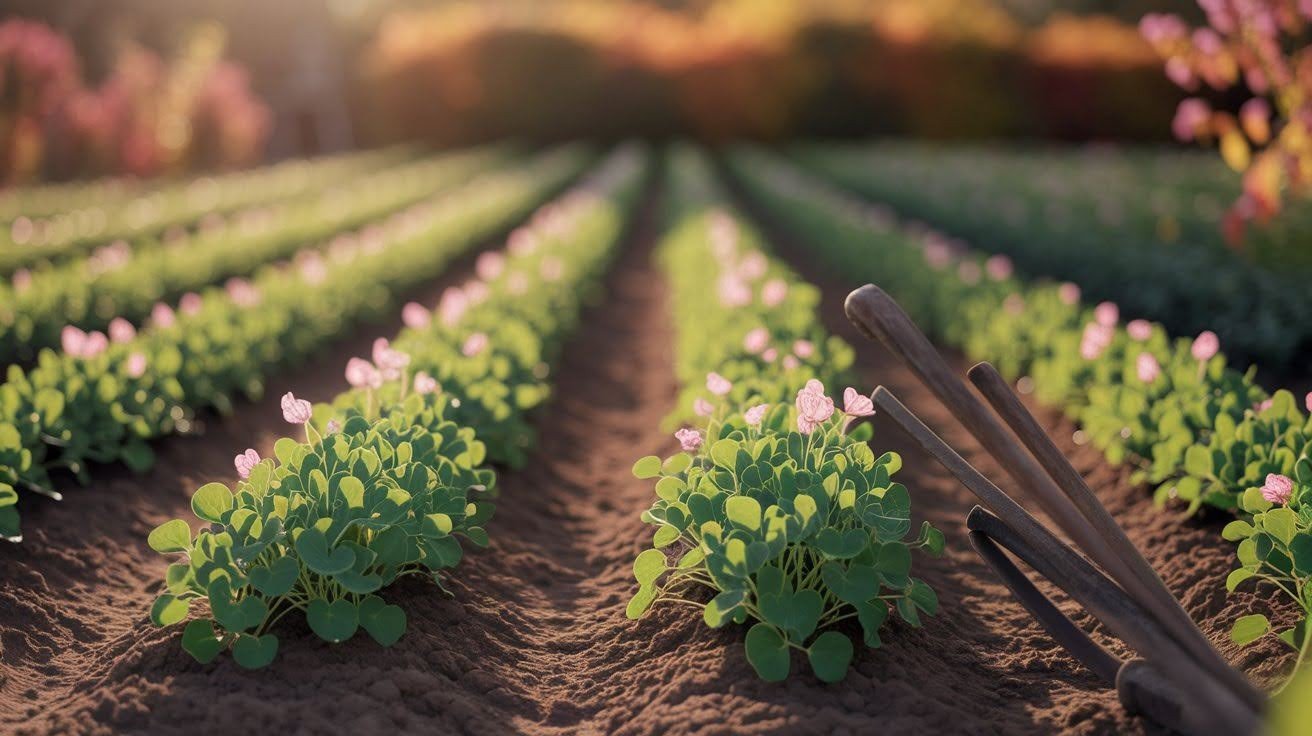
If you live where winters stay mild, fall is your sweet pea season. I recommend sowing seeds in October or November when temperatures cool down. This gives your plants time to grow strong roots before spring arrives.
Fall planting in warm zones has real benefits. Your sweet peas will be established and ready to bloom early in spring. They’ll produce flowers before the summer heat arrives and shuts them down.
When you plant sweet peas in autumn, you’re giving them the cool temperatures they need to thrive. They’ll grow slowly through winter and then take off when spring sunshine increases. This method produces the strongest plants with the most flowers.
Cold Climate Regions
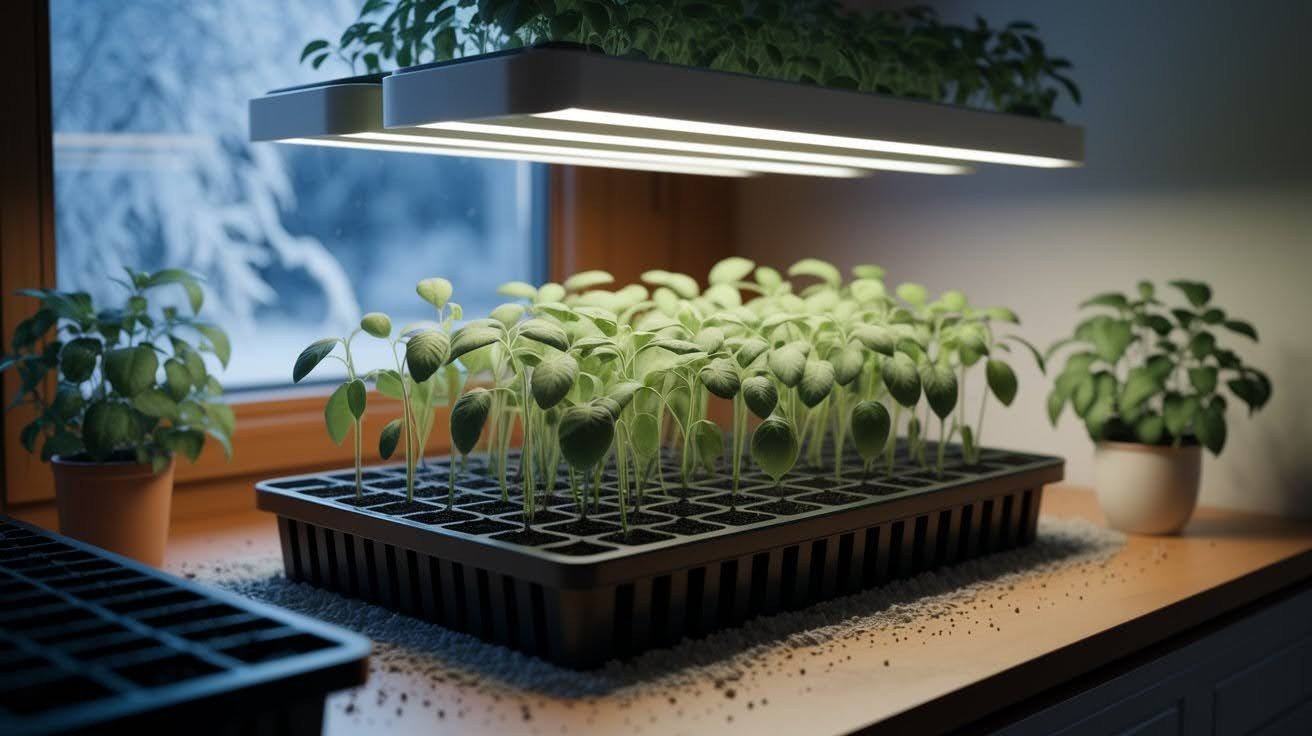
For those of us in cold areas, late winter or early spring is the right time. I start my sweet pea seeds indoors about 4-6 weeks before the last spring frost. This gives seedlings a head start while it’s still too cold outside.
You can move seedlings outdoors around your last frost date. Sweet peas are tough and can handle light frosts without problems. In fact, they prefer cool weather and will give you their best performance in spring temperatures.
Timing matters because sweet peas are cool-season flowers. They need to grow and bloom before the summer heat arrives. If you wait too long to plant sweet peas, they won’t have enough time to produce flowers.
Understanding Your Planting Window
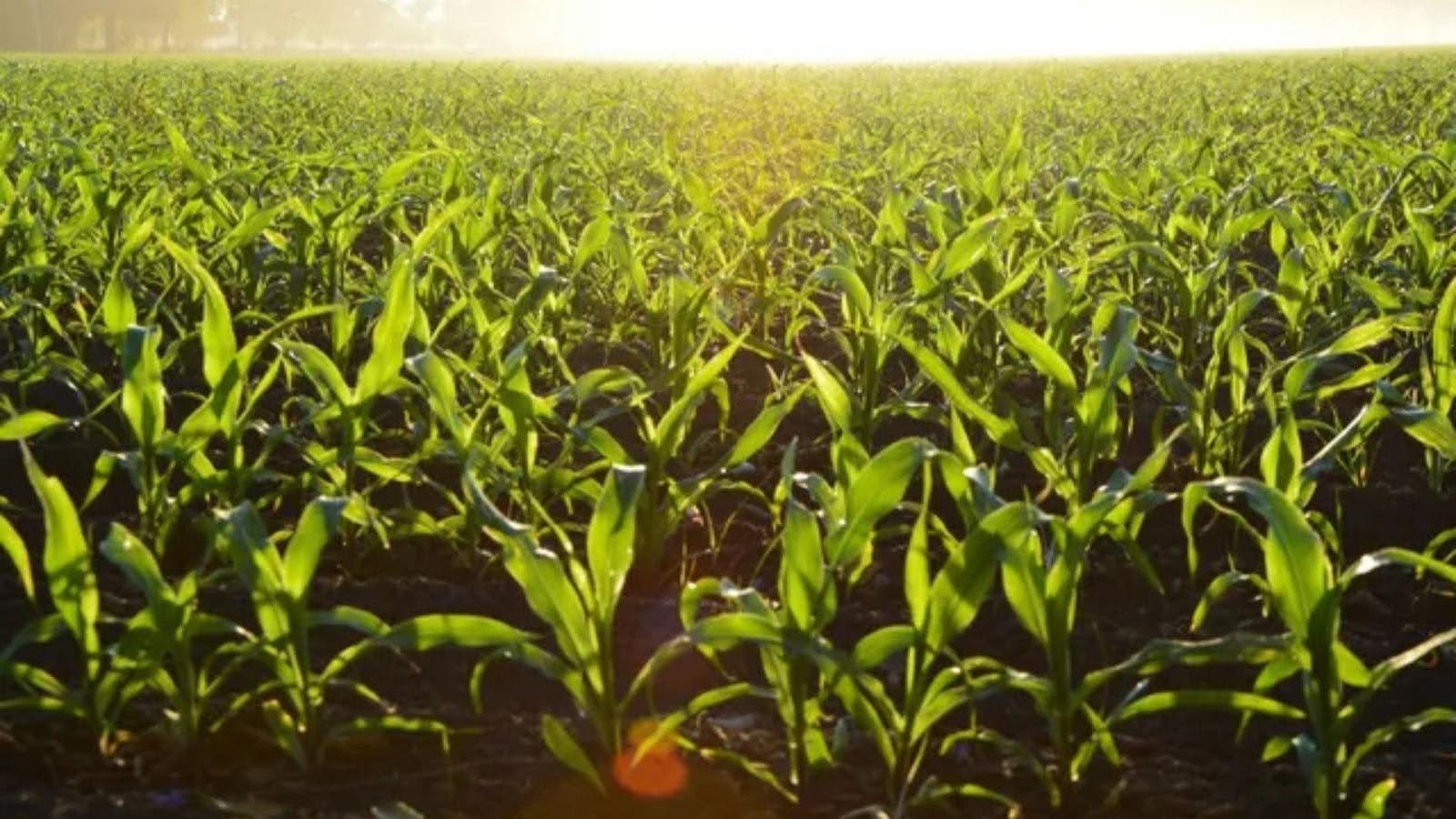
Temperature plays a big role in sweet pea success. These seeds sprout best when soil temperatures stay between 55-65°F. Much warmer than this, and germination slows down or fails.
From seed to garden takes about 10 weeks total. Seeds sprout in less than a week, then seedlings need 8-10 weeks to grow strong before transplanting. This timeline helps you figure out when to plant sweet peas based on your local frost dates.
I always count backwards from my planting-out date. If your last frost is April 15, start seeds indoors around February 1. For warm regions, planting in fall, start seeds in October. This planning ensures your seedlings are ready at exactly the right time.
Seed Soaking Method
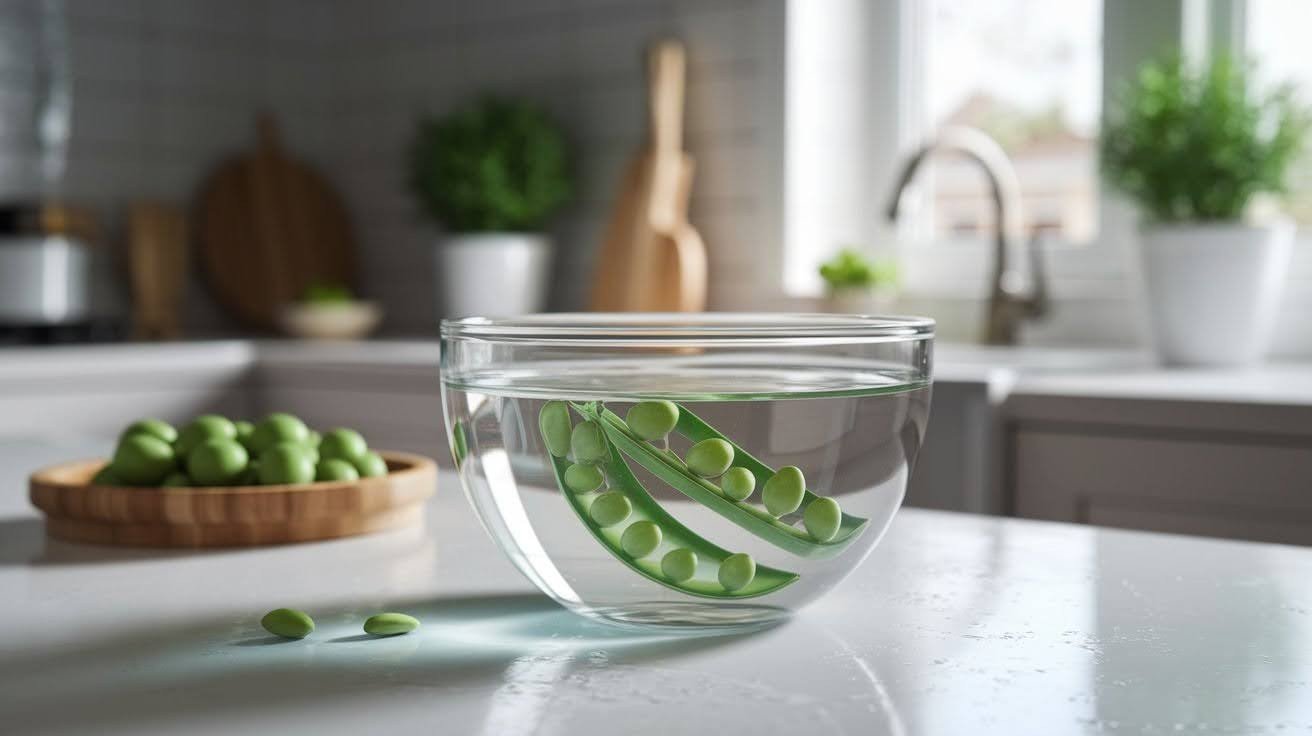
Here’s a simple trick that makes a big difference: soak your sweet pea seeds in water for 24 hours before planting. I use room-temperature water in a small bowl or cup. Just drop the seeds in and let them sit overnight.
This soaking softens the hard seed coat that sweet peas have. The outer shell absorbs water and becomes easier for the tiny plant inside to break through. You’ll notice the seeds look slightly swollen after soaking.
The result is faster, more even sprouting. Seeds that might take 7-10 days can sprout in just 4-5 days after soaking. This method is especially helpful with older seeds or varieties that have particularly tough seed coats.
Choosing the Right Containers
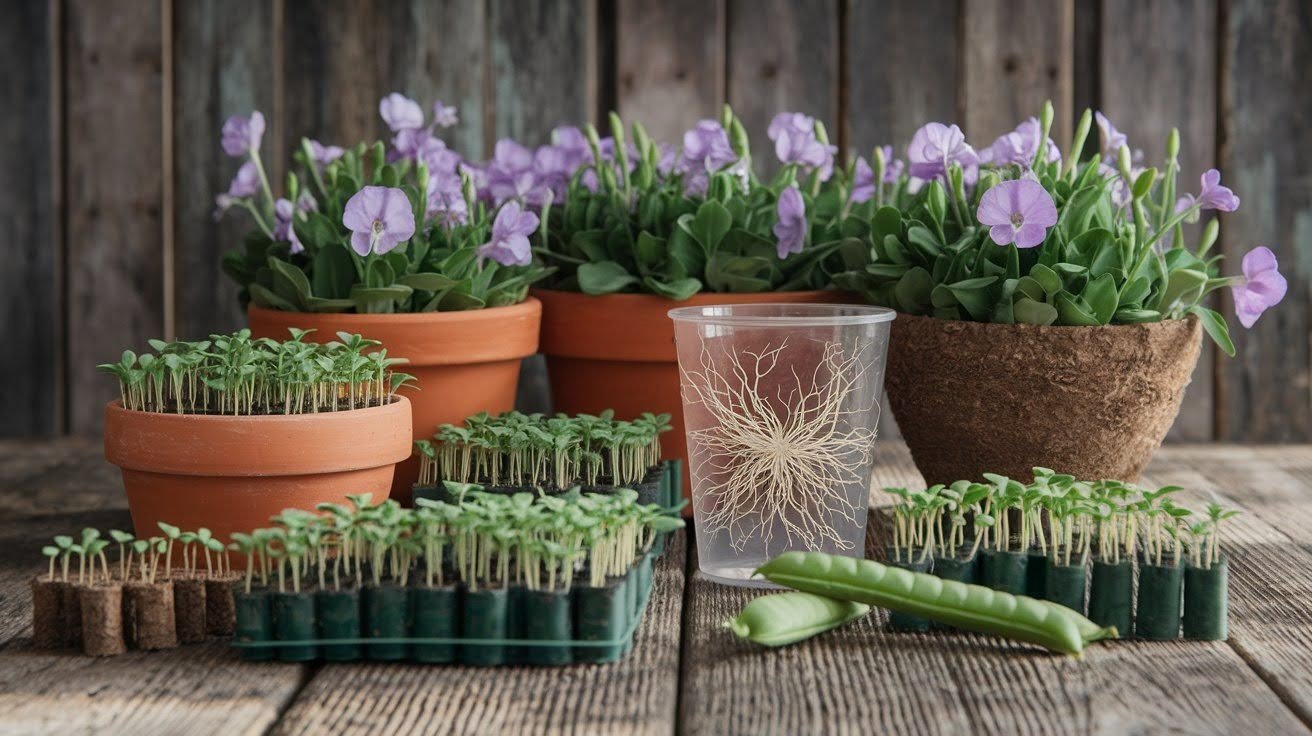
Sweet peas need deeper pots than many other flowers. I use containers that are 3½ to 4 inches deep. Regular seed-starting trays are too shallow and will hold back your plants.
Why does depth matter? Sweet peas develop long roots quickly. If they hit the bottom of a shallow container, the roots circle and become stunted. This creates weak plants that struggle after transplanting.
Deeper pots let roots grow straight down the way they want to. This builds strong, healthy plants that handle transplanting well. You can use individual pots, deep cell packs, or even toilet paper tubes. Just make sure they have drainage holes at the bottom.
Planting Process
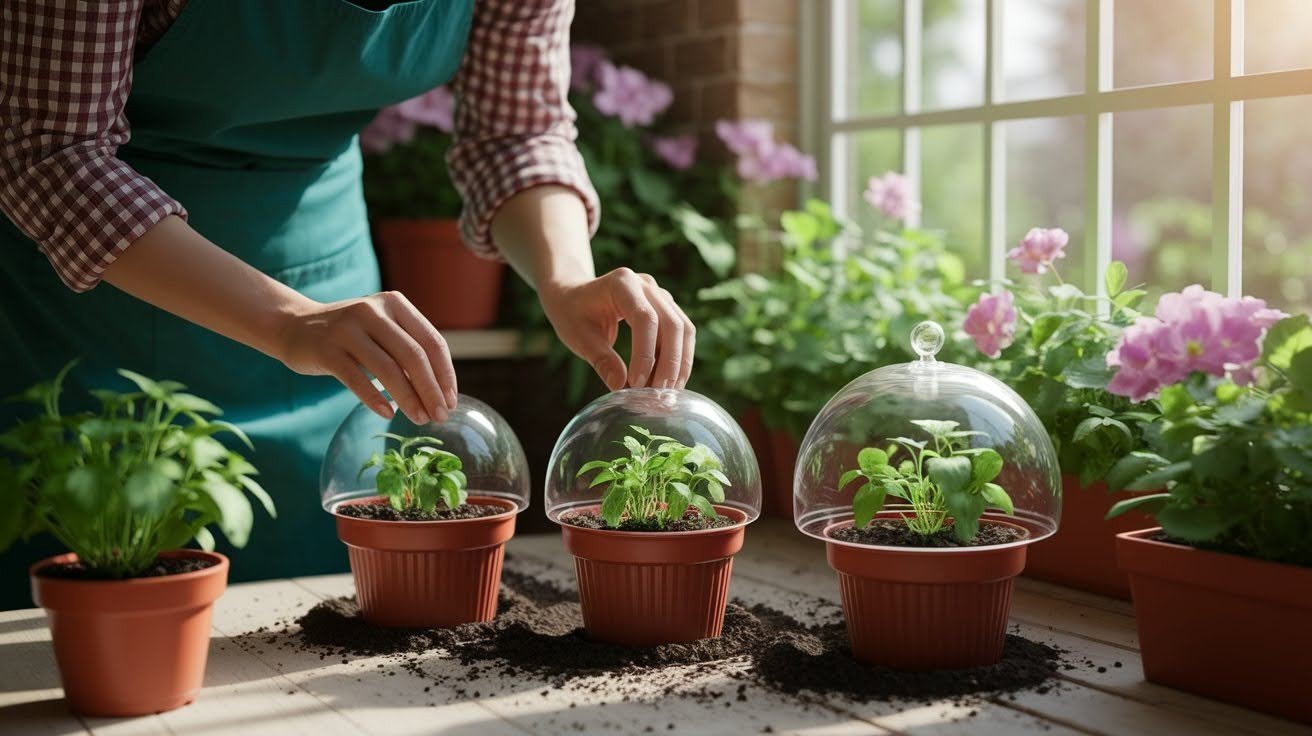
Start by filling your pots with good-quality seed-starting mix. Don’t use garden soil, which is too heavy. Seed-starting mix is light and fluffy, perfect for young roots. Fill containers almost to the top, leaving about half an inch of space.
Plant 2-4 seeds per pot, spacing them evenly. Push each seed about ½ inch deep into the mix. This depth is important – too shallow and seeds dry out, too deep and seedlings struggle to reach the surface.
Cover your planted pots with a plastic dome or clear plastic wrap. This keeps humidity high and helps seeds sprout faster. Place them in a cool greenhouse if you have one, or on a bright windowsill. Keep the mix moist but not soaking wet.
Germination Timeline
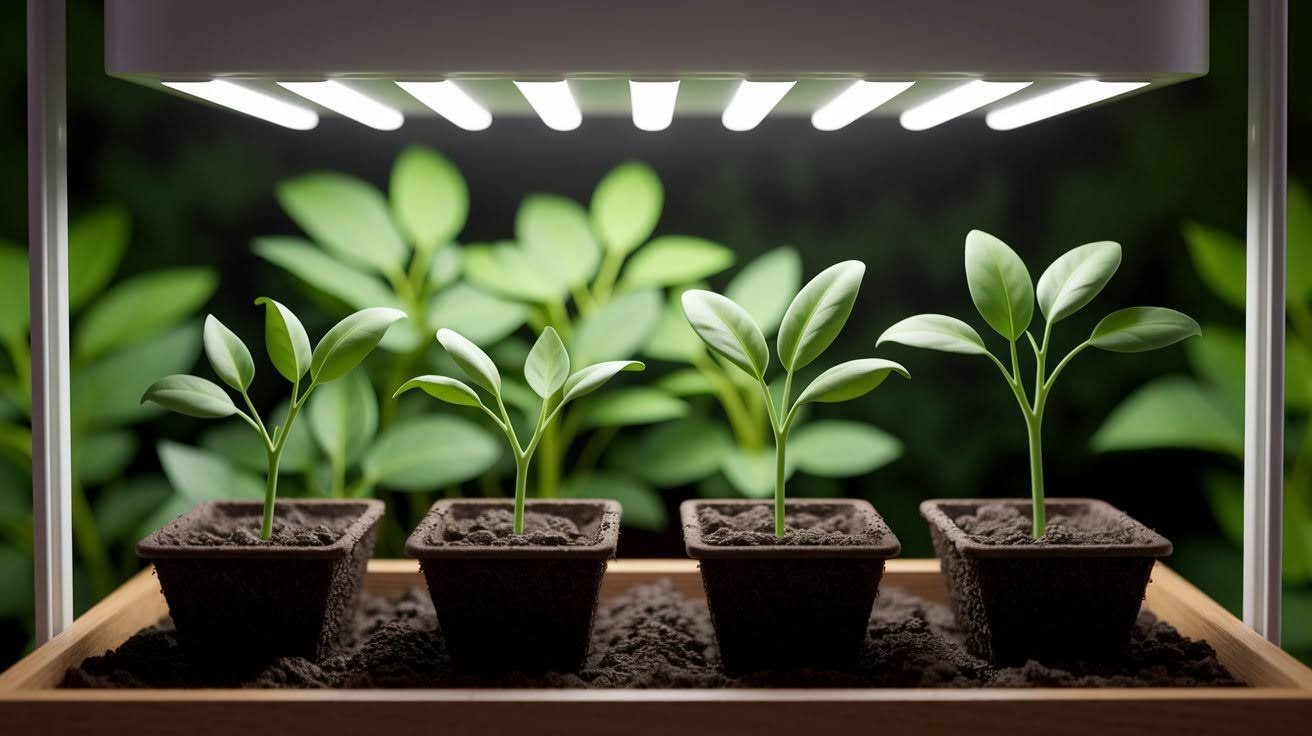
Good news – sweet peas sprout quickly! Expect to see little green shoots popping up in 4-5 days after planting. Some varieties might take a day or two longer, but most are fast germinators.
As soon as you see seedlings, remove the plastic cover. Seedlings need air circulation to stay healthy. At this point, they also need good light to grow strong. Weak light creates tall, floppy seedlings that don’t perform well.
Move your seedlings to the brightest spot you have. A south-facing window works, or use grow lights if natural light is limited. Keep the soil evenly moist and make sure temperatures stay cool – around 60°F is perfect for growing sweet pea seedlings.
Essential Supplies Checklist
Getting your supplies ready before you plant sweet peas makes the whole process smoother. Here’s what I keep on hand for sweet pea season:
- Top-quality sweet pea seed varieties: Choose types bred for fragrance and long stems. I buy from trusted seed companies that test their seeds for good germination rates. Look for varieties like ‘Cupani’ for deep purple color or ‘Matucana’ for amazing scent.
- Seed-starting mix and containers: Get a bag of sterile seed-starting mix, not regular potting soil. Grab enough 3½-4 inch deep pots for all the seeds you want to grow. Clean pots from last year work great if you wash them first.
- Compost and fertilizer: Sweet peas are hungry plants. Have finished compost, ready to work into your planting area. I also keep a balanced organic fertilizer on hand for feeding plants throughout the growing season.
- Support structures: Sweet peas are climbers that need something to grow on. Set up posts with netting, wire fencing, or bamboo tepees before plants get big. It’s much easier to install supports early than to try to add them later.
- Irrigation setup: These plants need consistent water, especially once they start blooming. A soaker hose or drip line saves time and keeps leaves dry, which prevents disease. At a minimum, have a good watering can ready.
- Labels for varieties: Trust me, you’ll forget which variety is which! Write names on plant labels or popsicle sticks using a permanent marker. Include the planting date too – this information helps you plan better for next year.
- Hand tools and gloves: A trowel for planting and good garden gloves make the work easier. Keep scissors or pruning snips handy for cutting flowers. The more you cut, the more sweet peas will bloom for you.
Conclusion
Sweet peas bring weeks of color and fragrance when planted at the right time. In warm areas, plant in October or November. This lets the roots grow strong before spring. In cooler areas, start seeds indoors about four to six weeks before the last frost.
From my experience, planning makes a big difference. I mark my calendar early and prepare deep pots. I keep the soil cool and moist. These small steps help the plants grow healthy and bloom well.
Check your local frost date. Gather your seeds and supplies. Start planting at the right moment. Soon, your garden will be full of sweet peas with the classic charm and scent that makes them so special.
Frequently Asked Questions
Can I plant sweet peas directly in the ground?
Yes, you can direct sow sweet peas outdoors in early spring or fall, depending on your climate. However, starting seeds indoors gives you earlier blooms and better control over growing conditions. Direct sowing works best in areas with long, cool springs.
How long do sweet peas take to bloom?
Sweet peas typically bloom 12-14 weeks after sowing seeds. This timing depends on temperature and growing conditions. Plants started indoors and transplanted out often bloom slightly earlier than direct-sown seeds because they get a head start on growth.
Do sweet peas need full sun?
Sweet peas grow best in full sun, meaning at least 6-8 hours of direct sunlight daily. In very hot climates, they appreciate afternoon shade to stay cooler. Morning sun is most important for strong growth and heavy flowering throughout the season.
Why didn’t my sweet peas germinate?
Poor germination usually happens when temperatures are too warm, seeds are too old, or soil stays too wet or dry. Sweet pea seeds need cool conditions around 55-65°F to sprout well. Always soak seeds before planting and keep the soil evenly moist during germination.
Can I grow sweet peas in containers?
Yes, sweet peas grow successfully in containers if the pots are deep enough. Use containers at least 12 inches deep with good drainage. Choose dwarf varieties for smaller spaces, or provide a trellis for climbing types.